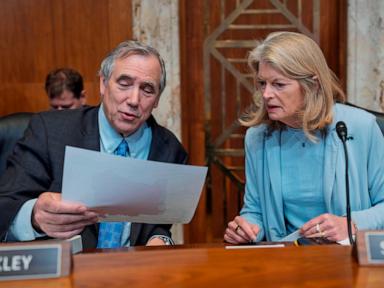
The political press is currently obsessed with a phantom. Headlines are screaming about a "growing resistance" in the Senate and treating Lisa Murkowski’s recent skepticism toward Iranian military engagement as a seismic shift in Republican foreign policy. It makes for great television. It creates a neat narrative of a fractured party and a check on executive power.
It is also fundamentally wrong. Recently making news recently: The Brutal Truth About Trump’s Beijing Summit and the Fracturing of Asia.
What we are witnessing isn't a sudden outbreak of pacifism or a principled return to constitutional war powers. It is a masterclass in risk-mitigation theater. To view Murkowski’s "flip" as a genuine pivot is to ignore the historical mechanics of how the Senate actually functions when the drums of war start beating. The consensus is that the GOP is divided on Iran. The reality? They are simply debating the optics of the inevitable.
The Senate Does Not Stop Wars It Delays Them for Leverage
The media loves the "maverick" trope. They want to believe that a handful of senators can act as a structural dam against military escalation. I have watched this cycle repeat for decades. From the lead-up to the 2003 Iraq invasion to the various "red line" debates regarding Syria, the pattern is identical: a few moderate voices express "deep concern," the press heralds a bipartisan breakthrough, and then, the moment the first missile flies, the dissent evaporates into "supporting our troops." More insights into this topic are explored by The Washington Post.
Murkowski isn’t flipping on the substance of Iran; she is shifting her position on the process. This distinction is vital.
When a senator demands a briefing or calls for a War Powers Resolution vote, they aren't saying "no" to war. They are saying "don't leave me out of the credit—or the blame." By positioning herself as a skeptic now, Murkowski secures a seat at the table for the eventual negotiations over authorization language. This isn't resistance. It’s an insurance policy.
The Fraud of the War Powers Debate
Everyone is asking if the President has the authority to strike without Congress. That is the wrong question. The real question is: Why has Congress spent forty years pretending they don't have the power to stop him?
The War Powers Act of 1973 is a toothless tiger, and every person in the Senate knows it. It provides a convenient shield for lawmakers to complain about executive overreach while ensuring they never actually have to cast a definitive "no" vote that could haunt them during the next election cycle.
- Logic Check: If the Senate truly wanted to prevent a war with Iran, they wouldn't be debating non-binding resolutions. They would be stripping funding from specific deployment lines in the National Defense Authorization Act (NDAA).
- The Data: In the history of the War Powers Resolution, Congress has never successfully used it to force a permanent withdrawal of U.S. forces from a conflict.
To call the current atmosphere "resistance" is an insult to the English language. It is a procedural skirmish designed to occupy the news cycle while the Pentagon continues its logistical build-up.
Why the "Isolationist GOP" Is a Fantasy
There is a popular theory that the "America First" wing of the Republican party has finally killed the neoconservative interventionist streak. This is a naive misunderstanding of modern populism.
The new Republican skepticism isn't based on a moral objection to intervention; it is based on a transactional view of power. The dissenters aren't worried about the ethics of a strike on Tehran; they are worried about the polling in the Midwest if gas prices hit seven dollars a gallon.
If you look at the rhetoric coming from the so-called "restrained" wing, it’s rarely about the sovereignty of Iran. It’s about the "forever war" exhaustion of the base. This makes their opposition incredibly fragile. The moment an Iranian-backed proxy makes a tactical error that results in high-profile American casualties, the "Murkowski flip" will flip right back.
The Institutional Incentive for Escalation
We need to talk about the defense industrial complex without sounding like a conspiracy theorist. It’s not a secret cabal; it’s a series of public line items.
The states represented by many of the "skeptics" are the same states where components for the B-21 Raider or the next generation of hypersonic missiles are manufactured. When a Senator looks at the map of Iran, they aren't just seeing a geopolitical adversary. They are seeing the justification for the next ten years of procurement cycles.
I’ve seen offices on Capitol Hill talk a big game about "fiscal responsibility" in the morning and then vote for a multi-billion dollar "emergency" supplemental package in the afternoon. War is the only thing that still has a 100% success rate for bypassing the filibuster.
Dismantling the "People Also Ask" Delusions
If you search for "Will the Senate stop an Iran war," you’ll find a sea of hopeful analysis. Let's correct the record on the most common misconceptions:
- "Can Murkowski lead a bipartisan coalition?" No. Murkowski is a weather vane, not a wind turbine. She reflects the current atmospheric pressure of her specific constituency. She does not have the institutional weight to pull the hawks in her party away from a conflict they believe is inevitable.
- "Does a War Powers vote matter?" Symbolically? Yes. Legally? Hardly. The executive branch has mastered the art of the "limited kinetic action" loophole. If the White House labels a strike "defensive" or "temporary," the Senate’s resolutions are essentially glorified press releases.
- "Is the GOP becoming the anti-war party?" Absolutely not. They are becoming the "anti-failed-war" party. There is a massive difference. They are perfectly happy with a "short, sharp" conflict that yields a political win. They are only terrified of a twenty-year occupation that drains the treasury.
The Brutal Reality of the Iranian Chessboard
Iran knows the Senate is a paper tiger. They don't look at a Murkowski quote and think the U.S. is paralyzed. They look at the carrier strike groups. They look at the refueling tankers moving into position in Diego Garcia.
The Senate’s "resistance" actually makes the situation more dangerous. By creating a public appearance of division, it might embolden Tehran to take risks they otherwise wouldn't, under the false impression that the American political will is broken. When the inevitable escalation happens in response, the Senate "skeptics" will be the first ones to vote for the blank check to "ensure we don't lose."
Stop looking for a hero in the Senate. There isn't one coming.
The Murkowski "flip" isn't a sign of a changing tide. It’s the sound of a politician checking which way the wind is blowing before the storm hits. If you want to know if we’re going to war, stop reading the Senate's whip counts and start watching the logistics ships in the Strait of Hormuz. The former is theater; the latter is reality.
If the Senate wanted to stop a war, they would have done it decades ago by reclaiming the power of the purse. They haven't. They won't. They just want to make sure they aren't the ones standing on stage when the bill comes due.
The "growing resistance" is a lie we tell ourselves because the alternative—that the legislative branch has voluntarily lobotomized its own power—is too terrifying to admit.
Stop falling for the theater. The play is already written, and the ending hasn't changed.