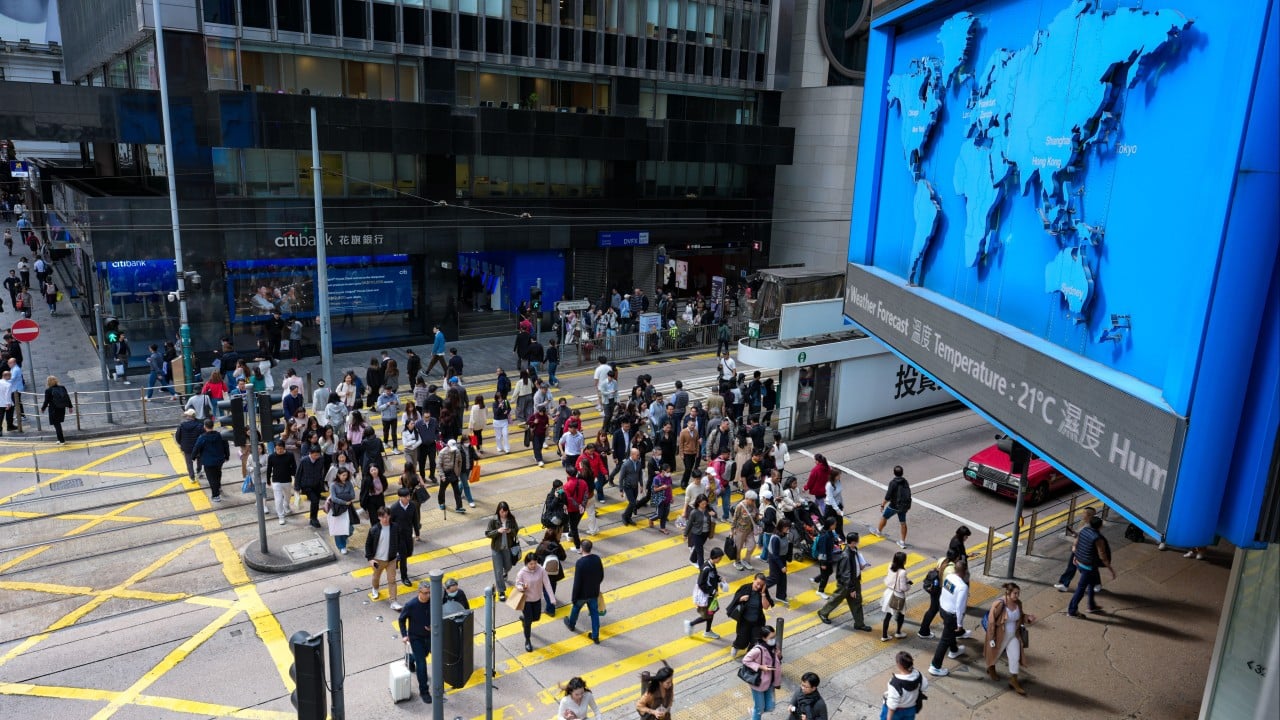
The humming of a server room at 3:00 AM sounds remarkably like a long, drawn-out sigh. For the traders and treasury officials in Hong Kong, that sound was the only soundtrack to a weekend spent watching red pixels bloom across news maps of the Middle East. When the missiles began their arc from Iran toward Israel, the distance of 7,000 kilometers didn’t matter. In the digital architecture of global finance, an explosion in the desert is a tremor in a skyscraper on Queen’s Road Central.
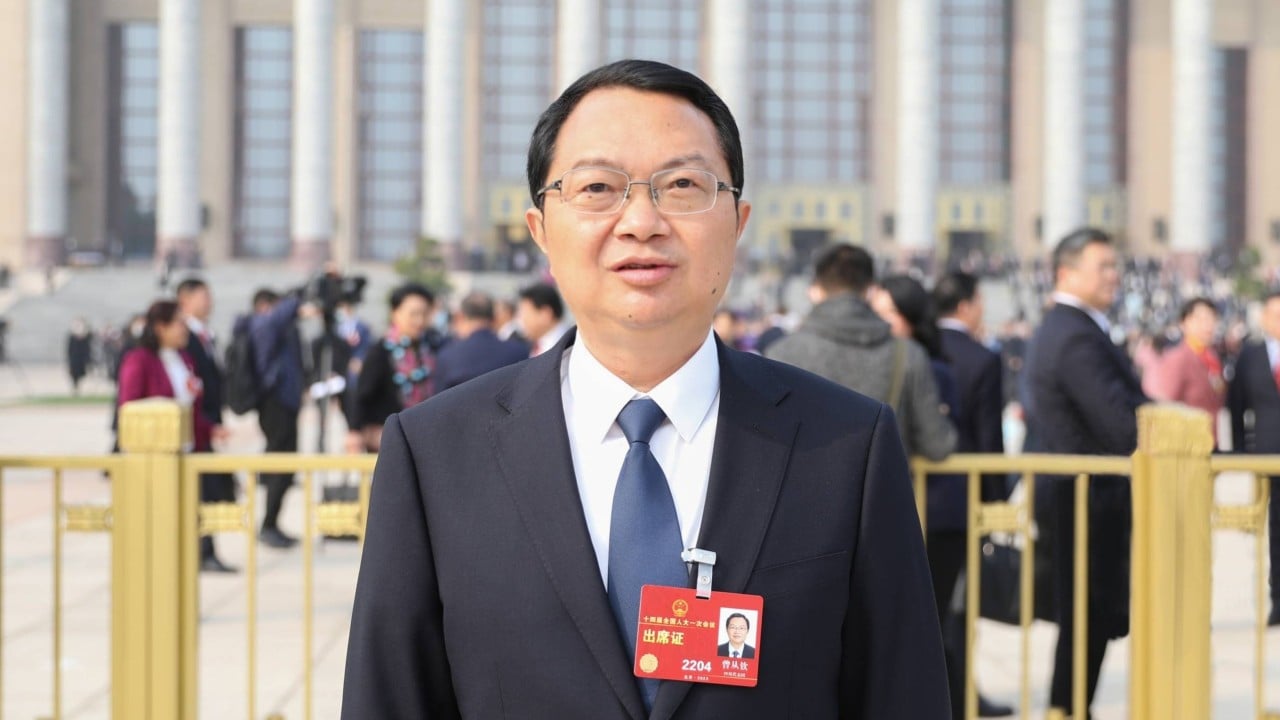
Financial Secretary Paul Chan didn't have the luxury of being a spectator. While the world watched grainy footage of interceptions in the night sky, his team was calculating the weight of gravity. Specifically, how hard the Hong Kong markets would hit the floor when the opening bell rang.
This is the hidden tax of modern life: volatility. We often treat "the market" as a math problem or a collection of ticker symbols, but in moments of geopolitical crisis, it reveals itself as a collective nervous system. When Iran launched its retaliatory strike, it wasn't just oil prices that spiked in anticipation. It was a sudden, sharp contraction of confidence that threatened to pull the rug out from under an already cautious recovery in Asia’s premier financial hub.
Consider a hypothetical investor named Mr. Lin. He isn't a wolf of Wall Street; he’s a man who runs a mid-sized logistics firm in Kowloon. To him, "market volatility" isn't a headline. It is the reason his bank just tightened his credit line. It is the reason the fuel surcharges on his shipping routes just jumped by $12%$. When Paul Chan stands before a microphone to say the government is "prepared," he isn't just talking to institutional hedge funds. He is trying to tell Mr. Lin that the floor beneath his feet is reinforced with steel, even if it feels like it’s vibrating.
The mechanics of this preparedness are less about secret vaults of gold and more about the boring, essential work of stress testing. Imagine a ship designed to stay upright in a Category 5 hurricane. You don't wait for the clouds to turn purple to check the ballast. For months, the Hong Kong Monetary Authority and the Securities and Futures Commission have been running "what-if" scenarios that look like something out of a techno-thriller.
What if oil hits $100$ a barrel? What if the US dollar goes on a rampage? What if the supply chains in the Strait of Hormuz effectively vanish overnight?
The government’s response to the Iran-Israel tension was a public exercise in calm. Chan’s message was clear: the city’s financial systems are "robust" enough—though I hate that word for its over-use, it fits here like a heavy coat in a storm—to absorb the shock. But how do you absorb a shock that has no clear end date?
The reality of 2026 is that we no longer live in a world of "events." We live in a world of "cascades." One event triggers a shift in interest rate expectations in Washington, which triggers a flight to safety in London, which drains liquidity from emerging markets in Asia. It is a Rube Goldberg machine where the final piece falling is often the retirement savings of a schoolteacher in Shatin.
Paul Chan pointed to the city’s massive foreign exchange reserves and its tight regulatory grip as the primary shields. But shields only work if the person holding them doesn't flinch. The psychological battle is often more difficult than the economic one. When the news broke of the attacks, the immediate fear wasn't just about the physical destruction; it was about the "risk-off" sentiment. This is a polite financial term for "everyone run for the exits at the same time."
In a "risk-off" environment, the nuance of a company’s earnings or the health of a city’s retail sector disappears. Everything gets painted with the same brush of fear. Hong Kong has spent the better part of two years trying to convince the world that it is open for business, that the dust has settled, and that the future is bright. A sudden flare-up in the Middle East is a bucket of cold water on that narrative. It forces the city back into a defensive crouch.
But there is a strange kind of strength in being the person who expects the worst.
By the time the markets actually opened on the Monday following the drone strikes, the "preparedness" Chan spoke of looked less like a press release and more like a shock absorber. The Hang Seng Index didn't collapse. It wobbled. It bruised. But it held. This happened because the mechanisms of the city—the automated margin calls, the liquidity buffers, the clearinghouse protections—did exactly what they were engineered to do. They bled off the adrenaline of the weekend so the work of Monday could begin.
The invisible stakes here are deeper than the daily fluctuation of a stock index. They involve the very concept of Hong Kong as a "safe harbor." If the city can remain a place of relative boredom while the rest of the world is on fire, it wins. Investors don't just look for high returns; they look for the ability to sleep through the night.
Chan’s insistence that the government is monitoring the situation "cross-market" and "round-the-clock" sounds like bureaucratic fluff until you realize it means there are humans in high-rise offices drinking lukewarm coffee at 4:00 AM, watching the price of gold and the movement of the Japanese Yen to ensure that a localized war doesn't become a global bankruptcy.
There is an inherent uncertainty in this. No one truly knows the ceiling of this escalation. If the "shadow war" between regional powers becomes a direct, sustained conflict, the playbooks change. The cost of shipping goes from expensive to prohibitive. The price of energy goes from a headache to a heart attack. In that scenario, even the best-prepared government is merely a captain trying to steer a ship through a whirlpool.
The human element of finance is often forgotten in the talk of algorithms and high-frequency trading. At its core, money is just a story we all agree to believe in. When we believe the story is about to end in a disaster, we pull our money out. Paul Chan’s job is to keep the story going. He is the narrator standing on the edge of the stage, telling the audience to stay in their seats because the intermission is almost over and the structural integrity of the theater is sound.
The volatility will continue. We are in an era where the "black swan" event—the unpredictable, high-impact disaster—is no longer a rare bird. It is a permanent resident in the pond.
For the people of Hong Kong, from the billionaire property developers to the families saving for a flat, the reassurance from the government is a cold comfort, but it is a necessary one. It is the difference between a controlled skid and a total rollover.
As the sun rose over Victoria Harbour on the morning after the attacks, the water looked the same as it always did. Grey, restless, and deep. The ships continued to move. The lights in the office towers stayed on. The city didn't stop to gawk at the flames in a distant land. It looked at the numbers, felt the tremor, and decided to keep standing.
The real test of a financial center isn't how it behaves when the sun is shining. It is how it handles the dark. In the wake of the Iranian attacks, Hong Kong showed that it has learned how to see in the dark, even if it doesn't particularly like what it sees.
We are all waiting for the next tremor. It isn't a question of if, but when. And in that waiting, the humming of the servers continues, a mechanical pulse in a world that is holding its breath, waiting to see if the next sigh will be one of relief or the start of a scream.