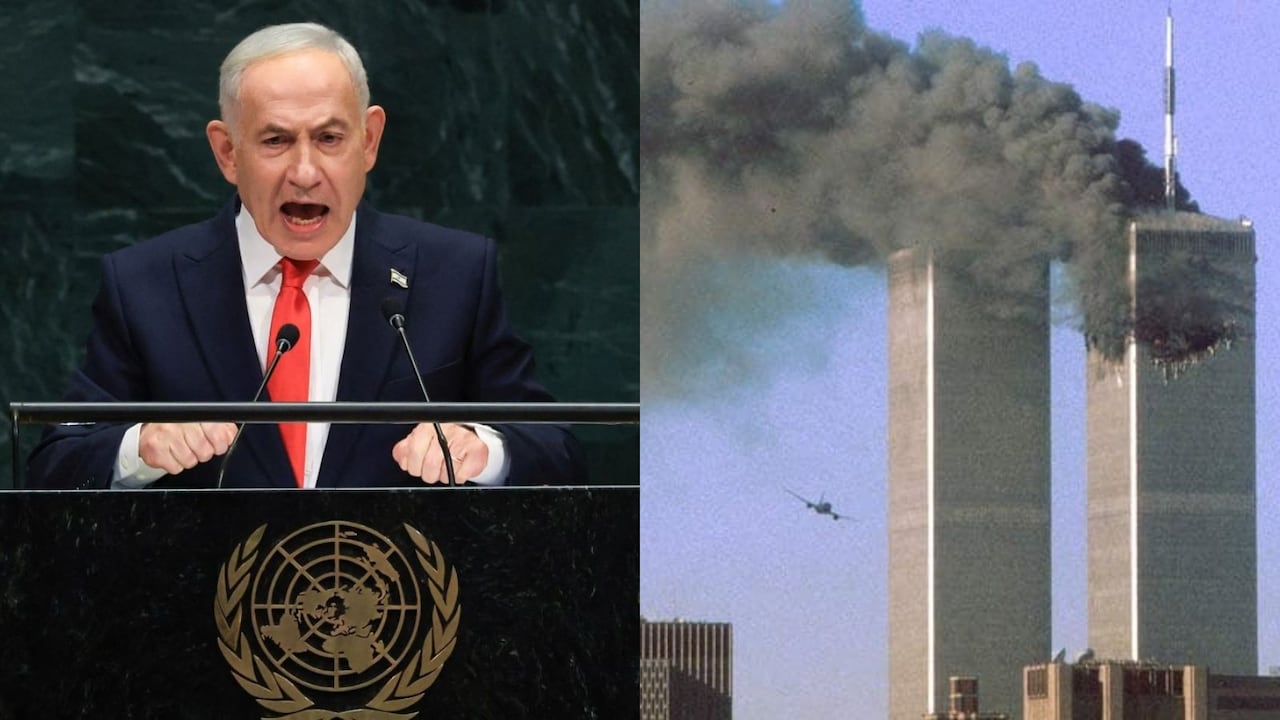
When sovereign states evaluate systemic shocks, absolute casualty figures obscure the structural vulnerability of small populations. The rhetorical deployment of comparative multipliers—such as equating a localized incursion to multiple historical benchmarks—serves to translate micro-state exposure into a scale legible to macro-state populations. Yet, relying purely on arithmetic scaling fails to capture the differential dynamics of societal resilience, geographic compaction, and economic redundancy. A rigorous strategic assessment requires decoupling emotional resonance from mathematical proportionality, examining how demographic density alters the velocity of national trauma and the subsequent strategic calculus of the state.
Demographic Density and the Mechanics of Exposure
To analyze the comparative weight of an attack, one must evaluate the baseline population parameters against which the event occurs. The population of Israel hovers near ten million inhabitants, operating within a geographic landmass roughly the size of New Jersey. By contrast, the United States population during the September 11 attacks stood at approximately 285 million distributed across a continental expanse. Learn more on a similar subject: this related article.
The absolute loss of 1,200 lives within a ten-million-person baseline represents a fractional mortality rate of approximately 0.012 percent of the total population in a single operational window. When projected onto a demographic baseline of 285 million, an equivalent fractional mortality rate yields roughly 34,000 to 40,000 fatalities. While mathematical proportion validates the numerical translation, treating human loss purely as a linear percentage ignores the spatial distribution of social networks. In a compact society characterized by mandatory military service, universal reserve integration, and high interpersonal connectivity, the degree of separation between any given citizen and a direct casualty approaches zero. Every loss functions not as an isolated statistical data point within a vast federal network, but as an immediate node disruption across nearly every family unit, workplace, and military unit simultaneously.
The Asymmetry Cost Function in Non-State Warfare
Non-state militant organizations operating along contiguous borders exploit asymmetric cost functions that traditional deterrence theories fail to price accurately. Traditional state-on-state deterrence relies on mutual vulnerability, secure second-strike capabilities, and rational economic actor models. Non-state entities embedded within civilian infrastructure operate under inverted economic parameters; their capital investment in asymmetric capabilities is remarkably low, while the systemic disruption they inflict on an advanced industrialized economy is exponentially high. Additional analysis by Associated Press delves into similar views on the subject.
The tactical objective of the October 7 incursion was not territorial conquest in the traditional Westphalian sense, but the systemic destruction of the state's sense of inviolability. By bypassing conventional border defense architecture using low-cost commercial drones, motorized paragliders, and coordinated infantry infiltration, the attackers pierced the technological shield that advanced security states construct to substitute for strategic depth. This operational design exposes a fundamental vulnerability of high-tech defense models: reliance on sensor-driven perimeter walls creates a brittle security posture. When the perimeter fails, the absence of territorial strategic depth accelerates the time-to-crisis horizon, forcing immediate, high-stakes military mobilization before political leadership can formulate a measured, multi-stage diplomatic or kinetic response.
Institutional Shock Absorption and Reserve Mobilization
A critical determinant of a state's survival following a catastrophic shock is its institutional absorption capacity. Micro-states cannot sustain prolonged, total mobilization without severe structural degradation of their domestic economy. Israel's mobilization of hundreds of thousands of reservists within days represented a substantial percentage of the active labor force.
This rapid conversion of civilian workforce capital into active military units triggers immediate economic contraction. Sectors ranging from high-technology engineering to agriculture and construction experience severe labor deficits. The economic cost function of such mobilization is front-loaded, creating an acute fiscal deficit alongside depressed productivity indices. Unlike continental superpowers that can absorb the economic friction of perpetual overseas contingency operations without disrupting domestic commerce, a compact nation-state operates with razor-thin economic margins. The institutional response must therefore balance the operational necessity of force projection against the inevitable threshold of macroeconomic exhaustion.
Intelligence Architecture Failure and Predictive Vulnerability
The strategic failure preceding the event highlights the limits of automated intelligence gathering in countering low-signature, decentralized threats. Modern defense intelligence relies heavily on signals intelligence, cyber surveillance, and pattern recognition algorithms to predict hostile intent. However, when an adversary reverts to low-technology communication methods, compartmentalized operational security, and long-term behavioral deception, high-tech surveillance architectures suffer from confirmation bias and information overload.
The intelligence failure was rooted in a structural assumption: that the adversary was deterred by economic incentives, incremental work permits, and the deterrent posture of advanced border fortifications. This assumption blinded the analytical apparatus to the adversary's long-term strategic patience and willingness to absorb tactical risks for systemic psychological gains. In strategic analysis, treating an adversary as a rational economic actor while ignoring ideological or asymmetrical strategic objectives guarantees predictive failure. The analytical correction requires shifting from static threat inventories to dynamic capability-and-intent modeling, accounting for non-linear actor motivations.
The Strategic Trap of Protracted Attrition
Once a state initiates a comprehensive military campaign to dismantle an entrenched asymmetric adversary embedded in densely populated urban environments, it enters a strategic trap defined by international legal scrutiny, humanitarian friction, and diplomatic isolation. The tactical victory of neutralizing an immediate existential threat often generates second-order strategic liabilities.
Urban combat against a non-state actor using human shields creates an asymmetric information war where physical destruction is captured and broadcast in real time, eroding the state's international legitimacy and straining alliances with key economic partners. The kinetic strategy of systematic dismantling runs directly into the center-of-gravity dilemma: the adversary's center of gravity is ideological and regenerative, whereas the state's center of gravity is coalition stability, economic continuity, and international standing. As military operations extend across extended timelines, the marginal utility of tactical gains diminishes while the cumulative cost of diplomatic friction and economic strain increases exponentially.
Strategic Pathways for Sovereign Defense
To secure long-term stability in an environment characterized by persistent asymmetric threats, military and political leadership must abandon the illusion of permanent tactical containment via static perimeter defenses. The operational blueprint moving forward requires three structural adjustments:
First, intelligence architecture must integrate decentralized human intelligence and red-teaming methodologies that actively challenge institutional consensus, specifically guarding against mirror-imaging assumptions about adversary rationality.
Second, defense procurement must pivot toward multi-layered, resilient architectures that do not rely on single points of failure, balancing high-cost precision interceptors with cost-effective kinetic and electronic countermeasures.
Third, national security doctrine must incorporate economic shock-resilience planning, establishing pre-configured institutional mechanisms to sustain critical civilian infrastructure and workforce continuity during sudden, high-intensity reserve mobilizations.
The security of a frontline state depends not on the absolute prevention of initial asymmetric shocks—which remain an inherent risk of geographic exposure—but on the velocity, precision, and structural sustainability of the state's systemic recovery and adaptive response.