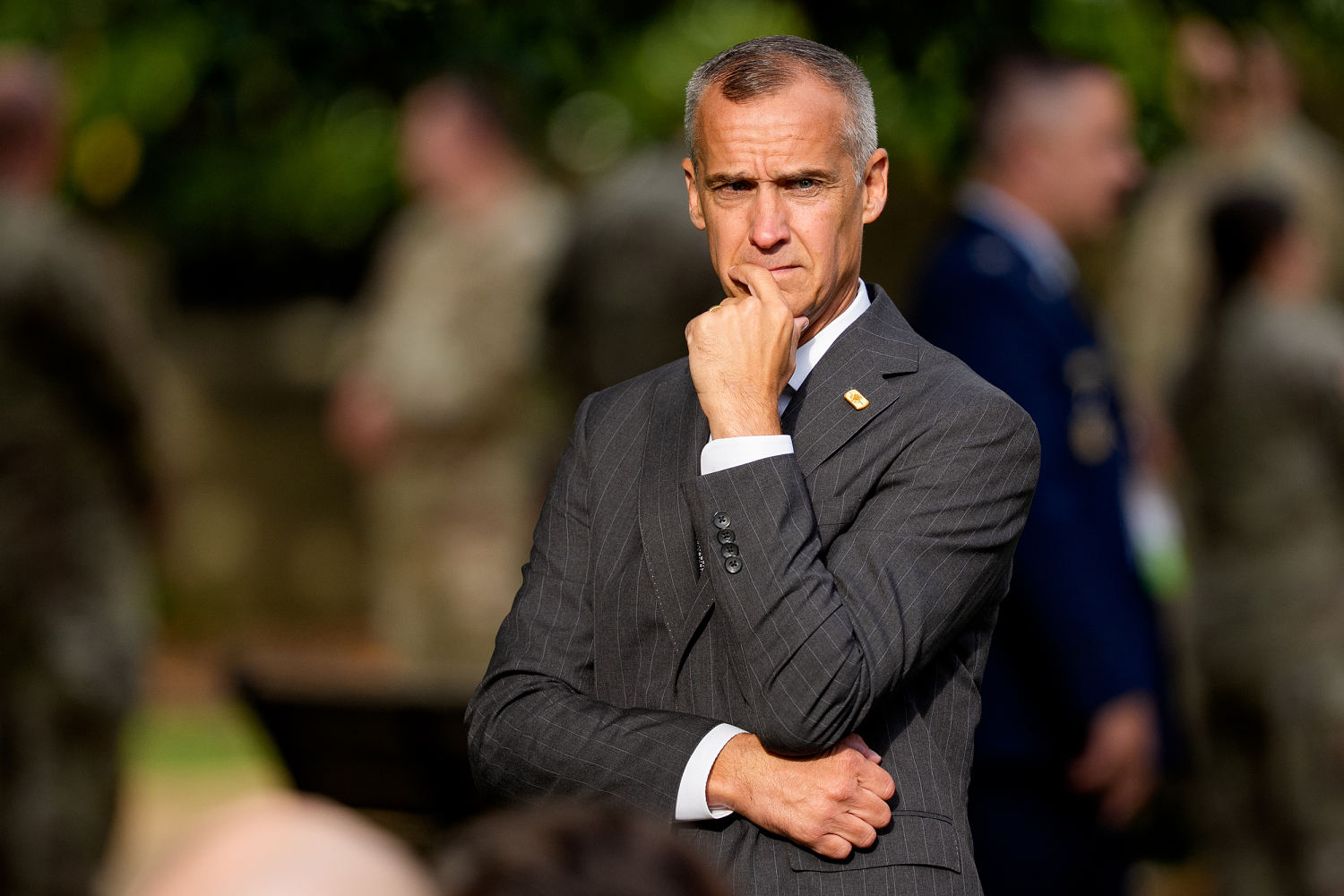
The Department of Homeland Security is designed to be a fortress of national stability, but for the past year, it has functioned more like a private fiefdom. At the center of this breakdown is Corey Lewandowski, a man with no official cabinet title and no Senate confirmation, yet who somehow became the most powerful gatekeeper in the building. Recent revelations from White House insiders and disgruntled contractors suggest a systemic "pay-to-play" culture where federal contracts—taxpayer dollars—were allegedly dangled as leverage to ensure personal and political loyalty.
This is not a story of simple bureaucratic inefficiency. It is a reconstruction of how a $100,000 threshold became a weapon of political control and how a "Special Government Employee" status was used to bypass the very ethics laws designed to prevent corruption.
The One Hundred Thousand Dollar Gate
In July 2025, a quiet policy shift fundamentally altered how the DHS spends money. Under the direction of then-Secretary Kristi Noem—and at the heavy urging of Lewandowski—the department lowered the threshold for the Secretary’s personal approval on all contracts and grants from $25 million to a mere $100,000.
To the uninitiated, this might look like "hands-on" leadership. In the world of federal procurement, it was a chokehold. By pulling almost every meaningful contract into the Secretary’s office, Noem and Lewandowski effectively stripped career procurement officers of their authority. This created a bottleneck where decisions were no longer made based on technical merit or cost-effectiveness, but on the personal sign-off of a "shadow chief of staff" who didn't even have a government email address.
Internal records and interviews with current DHS officials reveal that Lewandowski’s signature often appeared as the final "green light" on routing sheets before they reached Noem’s desk. Contractors began to notice a pattern: if you wanted your deal to move, you didn't talk to a program manager. You talked to Corey.
The Partisan Litmus Test
The most brazen example of this new reality surfaced in late 2025. The DHS posted a request for a $250,000 public affairs contract with a bid window so narrow it was practically invisible: less than 24 hours. More alarming was the requirement written into the bid itself. The winning firm had to demonstrate a "track record of promoting Trump administration policies in the media."
This is a direct violation of federal procurement guidelines, which mandate "complete impartiality" and prohibit "preferential treatment." Within four days, the contract was awarded to American Made Media Company (AMMC), a firm led by individuals with deep professional ties to Lewandowski.
But the $250,000 deal was small change compared to the $220 million advertising blitz that followed. Of that, $77 million was steered toward "People Who Think," a Louisiana-based firm run by another political operative with a history of working with Lewandowski. These weren't competitive bids; they were hand-picked rewards.
The Special Government Employee Loophole
How does a man with no official salary exercise this much power? Lewandowski was brought in as a Special Government Employee (SGE). This status is intended for short-term experts—scientists or technical consultants—to provide temporary help for no more than 130 days a year.
By remaining an SGE, Lewandowski avoided the rigorous financial disclosure requirements that apply to full-time federal officials. He could keep his private clients secret while simultaneously "volunteering" his time to approve multimillion-dollar contracts. It was a perfect cloak.
While the DHS claimed he worked only 69 days in 2025, insiders describe that figure as a "gross undercount." They describe a man who was in the building daily, directing personnel, vetoing long-term contracts in favor of new, shorter deals that fell under the $100,000 approval policy, and even traveling on a luxury 737 jet—dubbed the "Big, Beautiful Jet" by staffers—that was leased using funds originally earmarked for deportation programs.
Perjury and the Fall of Noem
The tension finally boiled over in March 2026. During a Senate Judiciary Committee hearing, Senator Richard Blumenthal asked Secretary Noem point-blank: "Does Mr. Lewandowski have a role in approving contracts?"
Noem’s answer was a definitive "No."
Days later, internal DHS records reviewed by investigative outlets proved the opposite. Lewandowski’s name was on the sign-offs for everything from equipment deals to PR campaigns. The discrepancy was so "brazen," according to procurement law experts, that it triggered a perjury investigation and, ultimately, Noem’s firing by the President.
The White House Counsel’s Office had reportedly grown weary of the "chaos" Lewandowski brought to the department. Even in an administration that values loyalty, the risk of a systemic procurement scandal—where contractors felt coerced into paying for access or proving political purity—was becoming a liability that could no longer be ignored.
The Cleanup Operation
The fallout is just beginning. House Oversight Democrats have demanded that DHS rescind the $100,000 approval policy and return to the prior $25 million threshold to prevent further "self-dealing." There is also a push to preserve all of Lewandowski’s private communications, including Signal chats and social media messages, which he reportedly used to bypass official record-keeping.
The real tragedy isn't just the potential loss of taxpayer money. It is the degradation of an agency’s mission. While the "Shadow Secretary" was busy vetting ad firms for their loyalty, critical counter-terrorism and cybersecurity initiatives were reportedly stalled. FBI agents specialized in Iranian sanctions evasion were recalled to do "immigration duty," leaving gaps in national security while the leadership focused on who got the next $100,000 check.
Would you like me to analyze the specific financial links between the firms that won these DHS contracts and Lewandowski’s past private clients?