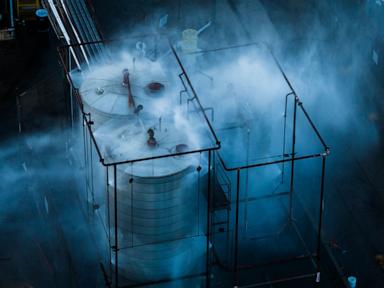
The media has a predictable playbook for industrial accidents. A plume of smoke rises over a West Coast refinery, local authorities issue a shelter-in-place order, and within hours, mainstream outlets run breathless features questioning the safety of massive industrial storage tanks. They point at the sheer scale of 100,000-barrel vessels as the inherent flaw. They call for smaller storage volumes, heavier regulation, and a complete overhaul of bulk liquid management.
They are wrong. They are focusing on the wrapper instead of the content.
The lazy consensus says that big tanks equal big danger. The reality is that bulk storage tanks are the safest, most heavily engineered components on any industrial site. After twenty years in chemical process safety, reviewing root-cause analyses from the US Chemical Safety Board (CSB) and standing on the concrete dikes of major tank farms, I can tell you the truth: the tank is almost never the problem.
When a chemical facility fails, the catastrophe starts in the invisible connective tissue—the pumps, the valves, the instrumentation, and the human culture that ignores them. Forcing industry to shrink tank sizes doesn't eliminate risk. It multiplies it.
The Economies of Scale Fallacy in Risk Assessment
The knee-jerk reaction to a West Coast chemical release is to demand smaller storage footprints. It sounds intuitive to the uninitiated. If a 5-million-gallon tank leaks, it’s a disaster; therefore, five 1-million-gallon tanks must be safer.
This is a dangerous mathematical delusion.
In process engineering, risk is a function of complexity. When you replace one massive tank with five smaller ones, you don't reduce the probability of failure. You increase it exponentially.
Let's look at the mechanical math:
- More Penetrations: A single large tank requires one primary inlet, one outlet, one thief hatch, and one set of relief valves. Five tanks require five times the number of nozzles, flanges, and gaskets. Every single flange is a leak point.
- Manifold Complexity: To manage five tanks, you need complex manifold piping, automated switching valves, and intricate level-control loops. You have just introduced dozens of new failure modes.
- Transfer Risks: Statistically, chemical releases rarely happen while liquid is sitting static inside a giant tank. They happen during transfer. By splitting your inventory, you increase the frequency of line hookups, valve alignments, and pumping operations.
By demanding smaller tanks, regulators inadvertently force facilities to build chaotic networks of piping and instrumentation. You are trading a highly predictable, easily monitored passive storage system for an active, twitchy plumbing nightmare.
Where the Real Danger Hides
If the tanks themselves aren't the villains, what is? Look at the data from actual historical disasters.
Consider the 2005 BP Texas City explosion. The failure didn't originate in a stable, well-maintained bulk storage tank. It happened during the startup of an isomerization unit, specifically inside a raffinate splitter tower and its associated blowdown drum. The system was overfilled because of faulty level indicators and a lack of high-level alarms, leading to a geyser of flammable liquid that ignited.
Look at the 2019 ITC fire in Deer Park, Texas. The fire erupted at a tank farm, yes, but the root cause wasn't a structural failure of the tank shell. It was a failed mechanical seal on an external pump used to circulate product within the tank. The leaking product ignited, and the lack of a remote-actuated isolation valve allowed the fire to feed directly from the tank inventory.
Common Misconception: Tank Shell Rupture ──> Catastrophe
Actual Reality: Component Failure (Pump/Valve/Gauge) ──> Uncontained Leak ──> Tank Involvement
The tank is a passive steel bucket. It sits there. The danger lies in the dynamic components.
1. The Gasket Obsession
Facilities spend millions inspecting the thick steel plates of a tank using advanced robotic ultrasonic testing. Meanwhile, they buy cheap, off-spec elastomeric gaskets for the pipe bridges leading to those tanks. A micro-crack in a $50 flange gasket under high pressure will atomize a chemical into a flammable mist long before a 1-inch tank wall suffers from localized corrosion.
2. The Tyranny of Bad Instrumentation
We live in an era of digital automation, yet many tank farms rely on legacy level-measurement systems or poorly calibrated radar gauges. If an operator receives a false reading, they can overfill a tank, lifting the internal floating roof past its travel limits. When the roof jams, hydrocarbon vapors escape directly into the atmosphere. The tank didn't fail; the human-machine interface did.
3. Vapor Recovery System Neglect
Modern environmental mandates require tanks to be tied into Vapor Recovery Units (VRUs) to capture volatile organic compounds (VOCs). These VRUs are complex, dynamic systems. If a VRU pulls too much vacuum, it can literally implode a massive steel tank like an empty soda can. If it creates too much backpressure, it blows out the emergency hatches. The safety measure itself becomes the primary ignition trigger when poorly designed or maintained.
Dismantling the "People Also Ask" Myths
When a chemical emergency hits the news, the public searches for simple answers to complex engineering problems. The prevailing narratives are built on fundamental misunderstandings of physics and metallurgy.
"Are industrial chemical tanks built near communities safe?"
The premise of the question implies that distance is the only metric of safety. The real question is whether the facility maintains its passive mitigation barriers. A massive tank is surrounded by a secondary containment dike (a bund wall) designed to hold 110% of the tank's total volume. If a tank suffers a catastrophic shell failure, the liquid is caught by the concrete or dirt berm.
The real hazard to nearby communities isn't a tidal wave of liquid; it is the vapor cloud. Vapor clouds don't care about dikes. And vapor clouds are generated by high-pressure pipe ruptures, spray leaks, and fires—not by liquid sitting quietly inside a vertical storage tank.
"Why don't we just put all bulk chemical tanks underground?"
This is a favorite suggestion of armchair environmentalists. Moving a 100,000-barrel tank underground turns a highly visible, easily inspectable asset into an invisible ticking clock.
Imagine trying to perform an American Petroleum Institute (API) 653 inspection on an underground tank. You cannot visually check the exterior shell for pitting. You cannot easily detect a slow leak through the bottom plates until it hits the water table. Furthermore, underground tanks are subject to hydrostatic lifting forces from groundwater. If the tank is emptied for maintenance, it can literally pop out of the ground like a cork, destroying all connected piping. Visible risk is manageable risk. Hidden risk is a gamble.
The Real Cost of "Safety Theater"
I have watched corporate executives pour millions into flashy, superficial safety upgrades to appease local politicians after a near-miss. They install expensive drone surveillance networks or build massive perimeter walls.
This is safety theater. It does absolutely nothing to prevent a chemical release.
If you want to actually secure a bulk liquid facility, you have to invest in the unglamorous, boring mechanics of process safety management (PSM). This means halting production to replace a suspect control valve. It means executing rigorous preventive maintenance schedules on critical safety devices like flame arrestors and pressure-vacuum vents.
The downside to this contrarian approach is obvious: it is incredibly expensive in the short term, and it requires highly skilled labor that is increasingly difficult to find. It is far easier for a CEO to write a press release about "increased safety patrols" than it is to shut down a profitable refinery unit for two weeks to rebuild a manifold. But the former is useless, and the latter saves lives.
Stop Regulating the Shape of the Container
Regulators love to focus on the tangible, easily measurable aspects of industrial infrastructure. It is simple to write a code that limits the height or volume of a tank. It is exceptionally difficult to regulate the operational discipline of a control room staff during a night shift change.
We must stop treating industrial accidents as tank failures. They are systemic management failures.
When we scream about the size of West Coast storage tanks, we let the operators off the hook for the real culprits: deferred maintenance on process piping, inadequate training on emergency isolation systems, and a corporate culture that prioritizes throughput over mechanical integrity.
If you want to prevent the next chemical emergency, stop looking at the giant steel cylinders dominating the skyline. Start looking at the small, corroded valves at their base. Turn off the news cameras focusing on the smoke, and look at the maintenance logs in the control room. That is where the disaster was actually manufactured.