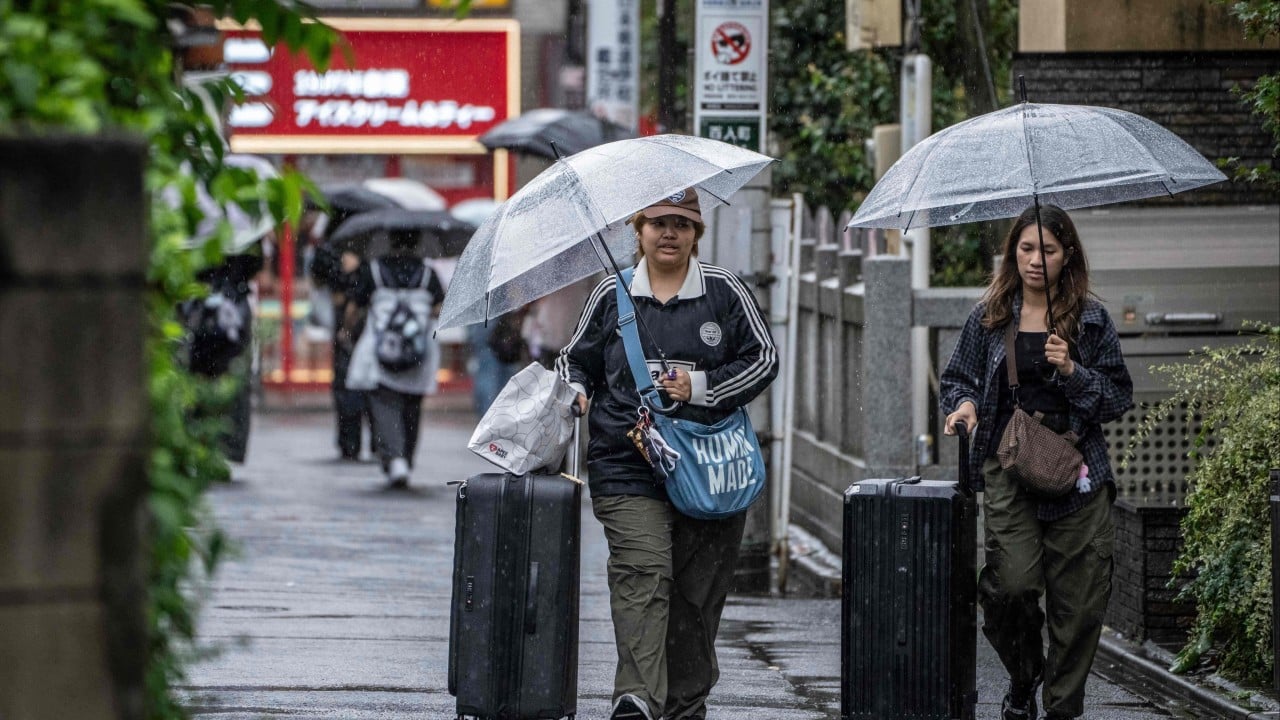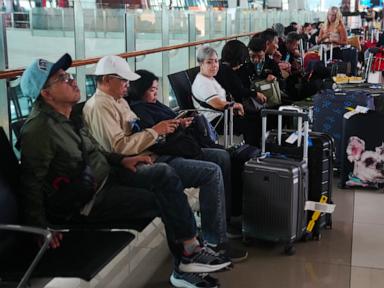
Every single time an Indonesian stratovolcano blows its top, the global travel media rolls out the exact same predictable panic porn. Hundreds of flights canceled. Thousands of tourists stranded in Bali or Lombok. Tearful interviews at departure gates. Sobbing families clutching overpriced airport sandwiches while anchors in air-conditioned studios nod gravely about the unpredictable fury of Mother Nature.
It is a theatrical production built entirely on collective amnesia and institutional cowardice.
The lazy consensus says that volcanic ash clouds are sudden, unavoidable acts of God that paralyze modern mobility because science is helpless against the raw power of the earth. I have spent two decades watching airline risk committees and civil aviation authorities use weather as an insurance policy for poor operational design. The volcano is not the crisis. The industry's brittle, low-margin architecture is the crisis.
Let us look at the mechanics of what actually happens when a crater like Mount Ruang or Lewotobi Laki-laki spits silicate glass into the upper troposphere. The standard playbook triggers a massive perimeter shutdown. Air navigation service providers draw a wide, terrified circle around the plume and ground everything with a rotor or a jet engine for hundreds of miles.
Why? Because twenty-five years ago, a British Airways Boeing 747 flew into an unmapped ash cloud over Mount Galunggung and choked out all four engines. It was a terrifying ordeal. But instead of engineering smarter detection systems, better real-time particle sensors, or dynamic rerouting algorithms, aviation regulators chose the laziest administrative shortcut available: zero tolerance for visibility of microscopic glass particles.
That single historic event codified a zero-risk dogma that treats all ash the same, whether it is a dense, engine-melting blizzard of abrasive rock or a few stray, completely harmless nanoparticles drifting fifty miles downwind.
When airlines cancel flights preemptively, they are not acting out of absolute safety. They are protecting balance sheets. Grounding a fleet shifts the entire financial burden of delays, accommodation, and rebooking onto the passenger or local governments, while airlines collect cancellation fees and dodge the operational cost of flying empty or delayed sectors through shifting wind corridors.
The Real Economics of the Stranded Tourist
Ask yourself why an ash cloud over a specific Indonesian archipelago corridor shuts down operations with surgical predictability, yet transatlantic routes regularly navigate complex weather systems with minimal drama. It comes down to regional infrastructure redundancy and the commodification of low-cost aviation.
The modern budget carrier model stripped away fat. There are no spare aircraft sitting on tarmacs in Denpasar. There are no buffer crews resting off-duty to absorb schedule shocks. When a volcano erupts, the house of cards collapses instantly because the system operates at maximum capacity ninety-nine percent of the time.
When thousands of travelers get stuck in departure lounges, travel writers love to wax poetic about the romantic unpredictability of island life. They tell you to rent a scooter, find a local café, and embrace the unexpected delay. That is patronizing nonsense. You are stuck because an airline optimized its margins by eliminating operational slack, and you are footing the bill with your vacation days and credit cards.
How to Beat the System
If you insist on traveling through high-risk volcanic zones during active seismic cycles, stop relying on airline apps that only update when a flight is officially dead.
First, ignore official generalized airspace closures for a moment and look at the actual wind telemetry. Volcanic ash does not form a static wall; it disperses according to high-altitude jet streams. Airlines cancel wide swaths of flights because it is cheaper to cancel a whole bank than to calculate individual flight paths around shifting plumes.
Second, abandon hub-and-spoke reliance in the region. If you are trapped in a secondary Indonesian island, do not wait for your international carrier to send a rescue charter. The legacy carriers will prioritize their own hub connections first. Ferry across to an unaffected port, secure a regional maritime connection, or book domestic hops on carriers that utilize older, mechanically forgiving turboprop aircraft which handle minor particulate interference far better than high-bypass turbofans sucking in massive volumes of air at high altitudes.
Third, buy travel insurance that explicitly covers airspace closure due to natural geological events, and read the fine print regarding consequential loss. Most policies sold at checkout are worthless add-ons designed by underwriters who know precisely how to classify a volcanic eruption as an act of God to invalidate claims.
The next time a mountain in the Ring of Fire decides to clear its throat, do not buy into the media narrative of helpless humanity trapped by angry gods. You are not witnessing the wrath of nature. You are watching a fragile corporate machine break down the moment it has to account for the planet it relies on. Stop apologizing for the airlines. Stop calling it an unpreventable disaster. And stop booking itineraries that treat operational resilience as an optional extra.