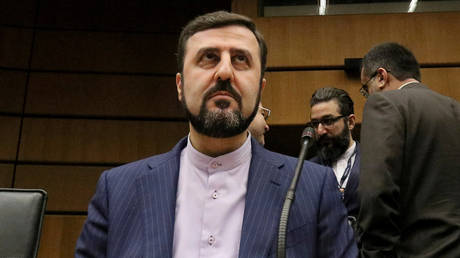
The persistent friction between the United States and the Islamic Republic of Iran is frequently reduced to a series of rhetorical rebukes, yet the underlying mechanic is a fundamental misalignment of strategic objectives. Tehran’s recent rejection of what it characterizes as a "letter of surrender" from Washington is not merely a linguistic flourish; it is a calculated response to a specific structural pressure: the U.S. policy of maximum economic coercion vs. the Iranian doctrine of strategic patience. This friction occurs because both parties are operating on different definitions of "stability." For Washington, stability is the total cessation of Iran’s nuclear and regional enrichment capabilities. For Tehran, stability is the preservation of the clerical establishment through a permanent state of managed resistance.
The Architecture of Irreconcilable Demands
The current diplomatic impasse is built upon three distinct pillars of disagreement that prevent any functional "grand bargain" from materializing.
- Nuclear Permanence vs. Reversible Constraints: The U.S. seeks "longer and stronger" restrictions that effectively de-industrialize Iran’s nuclear program. Tehran views the nuclear program as its primary source of leverage. In game theory terms, surrendering the program is a move toward a zero-utility state.
- Regional Proxies as Kinetic Insurance: The U.S. demands the dismantling of the "Axis of Resistance." From the Iranian perspective, these proxy forces (Hezbollah, Houthis, PMFs) are not optional extras; they are a cost-effective forward defense layer intended to ensure that any conflict occurs outside Iran’s borders.
- Domestic Sovereignty as a Non-Negotiable Asset: Any demand that includes "internal reform" or changes to the supreme leadership’s authority is interpreted as a regime change directive. This is where the "letter of surrender" terminology originates.
The Cost Function of Maximum Pressure
The U.S. strategy relies on the assumption that economic pain will eventually reach a threshold where the cost of defiance exceeds the cost of capitulation. This calculation fails to account for the "Survival Premium." When a state perceives an existential threat, its appetite for economic risk becomes effectively infinite.
Iran has adapted to economic isolation by developing a "resistance economy." This system is characterized by:
- Sanction-Proof Supply Chains: Utilizing informal banking networks (hawala) and front companies in third-party jurisdictions to move oil and capital.
- Internalization of Production: Shifting from an import-dependent model to a domestic manufacturing base, which, while less efficient, reduces the efficacy of external trade embargoes.
- Strategic Diversification: Pivoting toward the "Look to the East" policy, deepening security and economic ties with Russia and China to create a multipolar buffer against Western pressure.
The failure of the U.S. to achieve a "letter of surrender" through sanctions alone stems from a misunderstanding of this adaptation. Pressure does not always lead to breakage; it often leads to hardening.
The Logic of Strategic Asymmetry
In a conventional military or economic comparison, the United States possesses overwhelming superiority. However, Iran employs strategic asymmetry to neutralize this advantage. This is not about winning a direct conflict; it is about making the cost of US involvement unacceptably high.
This asymmetry is executed through a "Threshold Strategy." By operating just below the level that would trigger a full-scale US military response, Iran can achieve incremental gains. Examples include:
- Targeted Harassment: Low-level maritime disruptions in the Strait of Hormuz that spike global insurance rates without sinking an entire fleet.
- Cyber Attribution Gaps: Utilizing non-state actors or decentralized groups to conduct digital espionage or infrastructure disruption, allowing for plausible deniability.
- Nuclear Escalation Ladders: Increasing uranium enrichment to $60%$ as a direct response to specific Western diplomatic moves. This serves as a "ticking clock" to force the US back to the negotiating table on Iranian terms.
The Bottleneck of Trust and Verification
A significant reason for the "surrender" rhetoric is the total collapse of the verification-trust cycle. The 2018 withdrawal from the Joint Comprehensive Plan of Action (JCPOA) by the United States created a "Contractual Risk" that now dominates Iranian thinking.
The Iranian logic is straightforward: Why sign a new agreement if a subsequent administration can unilaterally void it? This creates a requirement for "Inherited Guarantees"—legal or economic mechanisms that would penalize the U.S. for future withdrawals. Since the U.S. executive branch cannot legally bind future presidents to a non-treaty agreement, and the Senate is unlikely to ratify a formal treaty, a structural dead-end exists.
This leads to a "Sub-Optimal Equilibrium." Both sides prefer the status quo of "no war, no deal" over the perceived risks of a flawed agreement. The US avoids the domestic political cost of appearing weak on Iran, and the Iranian leadership avoids the domestic risk of appearing to have surrendered to the "Great Satan."
The Pivot Toward Multipolarity
The geopolitical context of 2026 differs significantly from the 2015 JCPOA era. Iran is no longer negotiating from a position of total isolation. Its entry into the Shanghai Cooperation Organisation (SCO) and the BRICS+ framework has provided a psychological and logistical safety valve.
The "Three Pillars of Iranian Resilience" are now:
- The Russian Defense Partnership: Exchange of drone technology for advanced aviation and electronic warfare systems.
- The Chinese Energy Lifeline: Long-term oil purchase agreements that provide the Iranian treasury with a predictable, if discounted, revenue stream.
- Regional De-escalation: Improving ties with Saudi Arabia and the UAE to reduce the likelihood of a unified regional front against Tehran.
These pillars have effectively raised the floor of Iran's bargaining position. Washington's expectation of a "letter of surrender" is viewed by Tehran as a relic of a unipolar world that no longer exists.
The Escalation Ladder and Terminal Risks
While both sides currently manage their friction, the margin for error is narrowing. The risk is not a deliberate choice for war, but a "Calculated Misstep" in the escalation cycle.
If Iran moves to $90%$ enrichment (weapons grade), the U.S. and Israel may feel compelled to shift from economic pressure to kinetic intervention. Conversely, if the U.S. attempts a total maritime blockade of Iranian oil, Tehran is likely to activate its regional proxy network to disrupt the global energy supply. This is the "Samson Option" of Iranian foreign policy: if we cannot export oil, no one in the region will.
Strategic Recommendation for Analysts and Policy Makers
To move beyond the cycle of rebukes and rhetoric, a fundamental shift in the analytical framework is required.
- Move from "Behavior Change" to "Interest Alignment": Expecting the Iranian regime to abandon its core identity (anti-imperialism and regional influence) is a non-starter. Diplomacy must focus on specific, verifiable boundaries of activity rather than wholesale ideological shifts.
- Institutionalize Incrementalism: Large, comprehensive deals are currently impossible due to the trust deficit. Small-scale "freeze-for-freeze" agreements regarding enrichment levels and specific sanction waivers offer a more realistic path to lowering the temperature.
- Acknowledge the Multipolar Reality: The U.S. must recognize that sanctions fatigue is real and that global competitors are providing Iran with alternative paths to survival. The leverage of the dollar, while still massive, is not absolute.
The current trajectory indicates a continued "Long Cold War" in the Middle East. Success will be measured not by a signed "letter of surrender," but by the successful management of a permanent rivalry to prevent it from becoming a regional conflagration. The objective is not peace, but the avoidance of catastrophic miscalculation.