We love a neat historical box. Package a complex technological milestone as a simple tale of demographic triumph, serve it with a side of historical nostalgia, and watch the public swallow it whole.
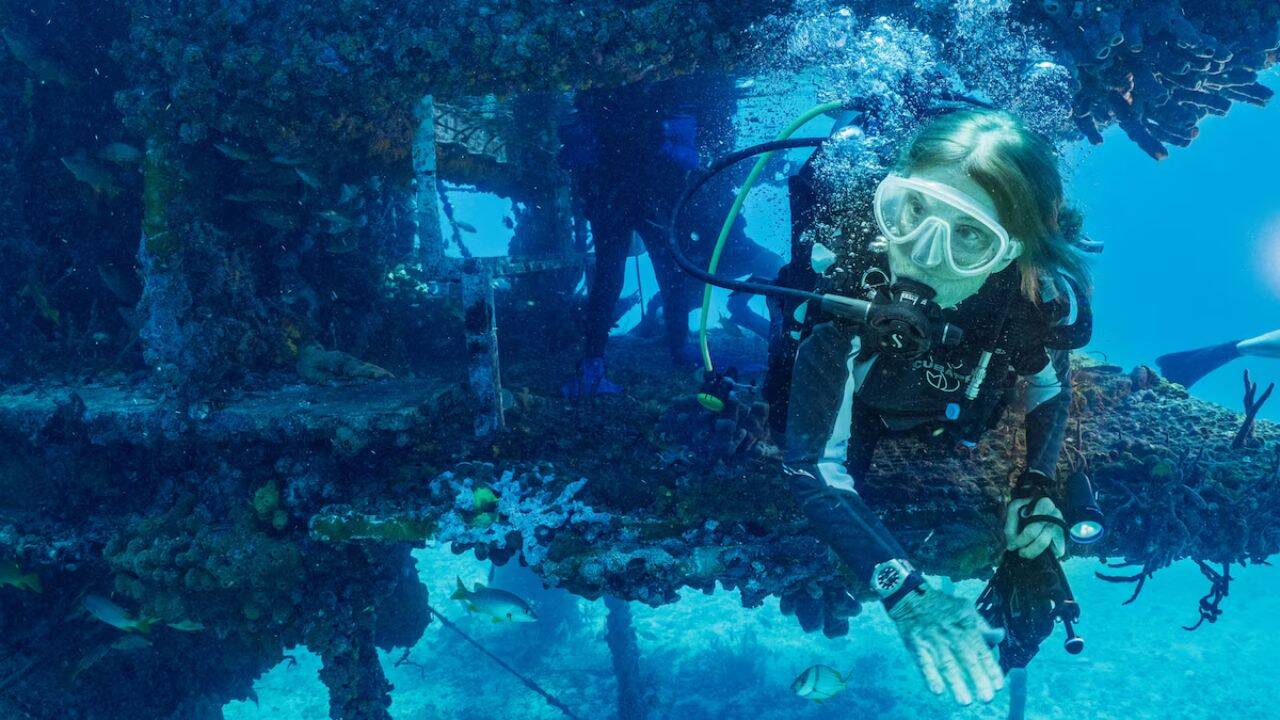
Every anniversary brings the same lazy narrative about Sylvia Earle and the 1970 Tektite II mission. Five women spend two weeks in a metal cylinder fifty feet down in Lameshur Bay. The internet treats it as a feel-good milestone about breaking barriers in extreme environments.
It is a sanitized myth. Not because the science was fraudulent, but because it misses the brutal economic and political reality of why we stopped living under the sea altogether.
We romanticize the aquanaut because looking backward is safe. Confronting why saturation habitats like Tektite were abandoned for corporate-backed robotic extraction is terrifying.
The Convenient Fiction of Social Progress
The standard historical retelling frames Mission 6-50 as a bold ideological strike against systemic exclusion. Bureaucrats initially balked at housing men and women in close quarters, so organizers pivoted to an all-female crew as a logistical workaround.
That is not a heroic crusade. That is mid-century administrative anxiety dressed up as a PR victory.
The participants—Earle, Alina Szmant, Ann Hartline, Renate True, and Margaret Ann Lucas Bond—did not descend to make a political statement. They were rigorous marine biologists and engineers who logged more daily in-water research hours than their male predecessors. They outworked, out-sampled, and out-thought the bureaucratic framework housing them.
Yet history reduces their grueling physiological adaptation and dense ecological mapping to a bullet point about representation. We turn fierce field science into an after-school special. By focusing exclusively on who wore the dive gear, media outlets ignore the harder question: why did saturation diving hit a hard ceiling right after the ticker-tape parades stopped?
The Economics of Staying Dry
Let us look at the ledger. Saturation habitats are phenomenally expensive, hyper-vulnerable liability traps.
NASA and the U.S. Department of the Interior funded Tektite because they wanted analog data for space stations and continental shelf colonization. They thought humans would colonize the continental shelf the way we built suburbs. They were wrong.
Maintaining a pressurized steel habitat fifty feet underwater requires continuous life-support logistics, surface gas mixing, umbilical cables, and constant medical monitoring. The operational cost per square foot of bottom time is astronomical.
When government budgets shifted toward the Space Shuttle and deep-water military black projects in the early 1970s, programs like Tektite were cut without hesitation. Capitalism does not fund underwater habitats out of curiosity. It funds whatever maximizes extraction speed.
Sylvia Earle understood this shift better than anyone. That is why she stopped waiting around for government-funded habitats and started building hardware. Her later work with Deep Ocean Engineering and Deep Ocean Technologies focused on submersibles and atmospheric diving suits like Deep Rover. She abandoned the stationary underwater house because mobility beats imprisonment every single time.
Why We Ask The Wrong Questions About 1970
People scanning archives for Tektite trivia usually ask: How did the women handle the psychological isolation of living in close quarters?
That question assumes the primary bottleneck of human marine exploration is psychological endurance. It is not. Human psychology is remarkably adaptable; put five sharp scientists in a steel tube with a television and a kitchen, and they will run marine transects until their eyes bleed.
The actual bottleneck is thermodynamic and economic. Human tissue under pressure requires decompression schedules that limit operational flexibility. A human diver at fifty feet is constrained by gas toxicity, thermal loss, and cumbersome life-support tethers.
Meanwhile, remotely operated vehicles do not get hypothermia. They do not require helium-voice speech scramblers. They do not suffer from nitrogen narcosis at depth.
When we praise the 1970 mission purely as a milestone for human presence, we miss the technological pivot that made human presence obsolete. Earle herself spent her career fighting for ocean conservation not by sitting in a stationary habitat, but by diving untethered to 1,250 feet and pushing for marine protected areas. She realized the ocean does not need more humans camping on the floor. It needs humans who respect its boundaries.
Stop Celebrating The Container
The legacy of the Tektite II women is not that they proved humans could survive underwater. Humans have known how to swim and breathe compressed air for generations.
Their real legacy was data density. They mapped 154 species of marine plants, including 26 previously unrecorded in the Virgin Islands, while operating under absurd institutional constraints. They extracted maximum scientific value from a dying funding model.
Stop reducing pioneering marine science to a milestone checklist. Stop pretending that putting humans in an underwater tin can was ever a scalable blueprint for civilization.
Sylvia Earle didn't spend her life underwater just to star in your historical anniversary trivia. She did it because the surface view was never enough.