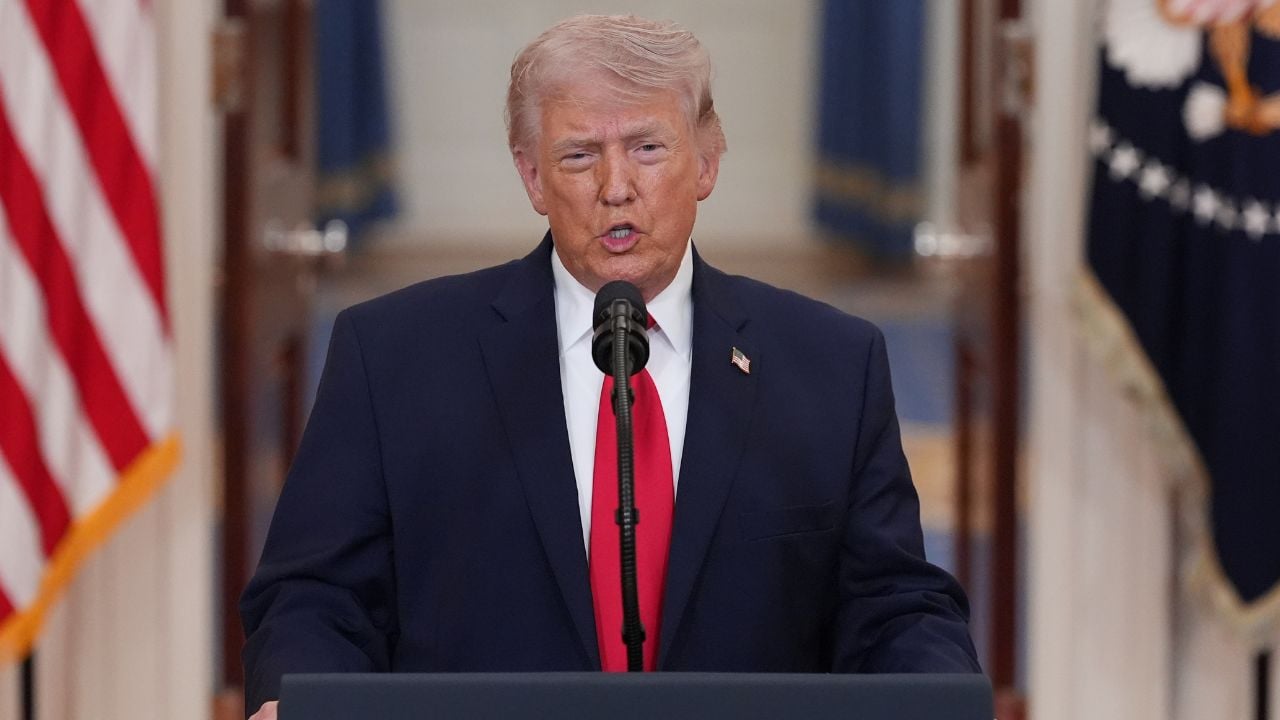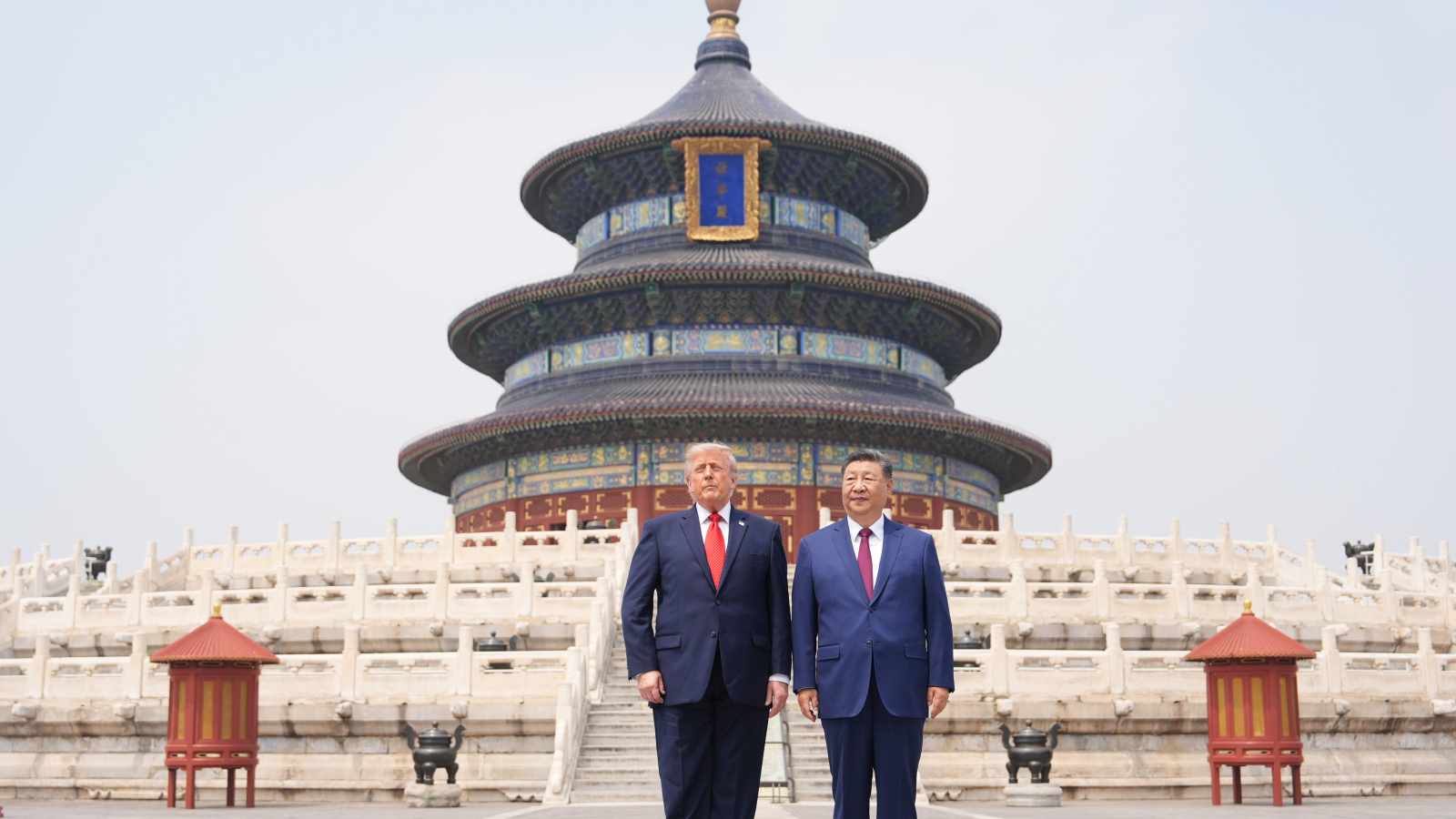
Xi Jinping isn't exactly known for subtle hints. When the Chinese leader sat down with Donald Trump in Beijing this week, he didn't just repeat old talking points. He basically drew a circle in the sand and told the Americans that stepping inside means war.
The message was blunt. If the U.S. mishandles the Taiwan issue, we aren't just looking at a trade spat or a diplomatic cold shoulder. We're talking about "conflict" and "clash." For a guy like Xi, who usually speaks in carefully curated metaphors about "win-win cooperation," this is as close to a threat as it gets.
The timing is everything. Trump just returned to the White House with a massive mandate and a bunch of ideas about using Taiwan as a bargaining chip for a better trade deal. Xi is signaling that Taiwan is the one thing he won’t trade. It’s the "red line" of all red lines. If you're wondering why the global markets looked a bit shaky this morning, that's your answer.
The four red lines Trump can’t ignore
Beijing has formalized its boundaries into a specific list. They call them the "four red lines." While they’ve mentioned these before, the intensity during this summit was different.
- The Taiwan Question: This is the big one. China sees any move toward official independence or even high-level military cooperation as a direct attack on its sovereignty.
- Democracy and Human Rights: Xi basically told Trump to stop lecturing China on how it treats its own people. He views U.S. "interference" here as a tool for regime change.
- China’s Political System: Don't try to change the Communist Party. Beijing is hyper-sensitive to any American rhetoric suggesting the CCP shouldn't be in charge.
- China’s Right to Development: This is shorthand for "stop the chips war." Beijing wants an end to export controls on high-end tech and AI hardware.
Honestly, the Taiwan issue overshadows the other three combined. It’s the only one likely to start a shooting war. Trump's history with the island is complicated. During his first term, he was the first president in decades to take a call from a Taiwanese leader. But he's also complained that Taiwan "stole" the U.S. semiconductor business and should pay for its own protection.
That unpredictability is what's keeping Beijing awake at night. If Trump treats Taiwan like a real estate deal, he might accidentally cross a line that China feels it has to defend with force.
What happens when a dealmaker meets a nationalist
Trump loves leverage. He’s already hinted at using 60% tariffs on Chinese goods to force concessions on trade. In his head, maybe he thinks he can say, "Hey, we’ll back off on Taiwan arms sales if you buy a trillion dollars of Boeing planes and Midwest soybeans."
But Xi doesn't see Taiwan as an economic asset. He sees it as a historical mission. For the CCP, "reunification" is the ultimate proof of their legitimacy. You can't trade your soul for a better price on soybeans.
The danger here is a massive cultural and political disconnect. If the White House treats Taiwan as a "negotiating point" and Beijing treats it as a "holy cause," someone is going to miscalculate. Xi’s warning about "mishandling" the issue refers specifically to this—the idea that the U.S. might not take Chinese threats seriously until it's too late.
The $14 billion arms package problem
There's a massive $14 billion backlog of American weapons destined for Taiwan. Trump hasn't signed off on them yet since returning to office. It’s a classic Trump move—holding back to see what he can get in return.
Xi wants those sales stopped entirely. He told Trump that "handling the issue properly" means respecting the one-China principle and the joint communiques that form the basis of their relationship. If Trump releases those weapons, expect a furious response. If he holds them too long, he looks weak to his own hawks in Washington. It’s a total lose-lose for the new administration's optics.
Why this isn't just 2017 all over again
The world is much more dangerous than it was during Trump's first term. We have an ongoing conflict in the Middle East—specifically involving Iran—and the war in Ukraine shows no signs of stopping.
China’s military is also significantly stronger than it was eight years ago. Their navy is larger, their missile tech is more advanced, and they've practiced "sealing off" Taiwan multiple times through massive drills. When Xi warns about a "clash," he’s not bluffing from a position of weakness. He knows he has the regional capability to make things very messy for the U.S. Seventh Fleet.
What’s also changed is the "G2" dynamic. Trump has allegedly revived this term, acknowledging that the world is basically run by two superpowers. That sounds like a compliment, but it’s actually a trap. By accepting the G2 label, the U.S. is admitting that China is an equal peer. And equals don't get to tell each other what to do in their own backyard.
Steps you should take to track the fallout
If you're an investor or just someone worried about global stability, watch for these specific signals over the next few weeks. They'll tell you if we're heading for a "clash" or a "truce."
- Watch the arms sale approval. If the White House greenlights the $14 billion package for Taiwan, Beijing will likely freeze all trade negotiations.
- Monitor the Strait transit. Look for how often U.S. warships sail through the Taiwan Strait. If the frequency drops, Trump is likely trying to play nice to get a trade deal.
- Keep an eye on semiconductor stocks. Companies like TSMC are the canary in the coal mine. Any "clash" rhetoric from Beijing usually hits their stock price first.
The reality is that Xi Jinping just handed Donald Trump a very narrow path to walk. One wrong step—whether it's an accidental tweet or a deliberate policy shift—could ignite the very conflict both men claim they want to avoid. Trump thinks he's the world's best negotiator, but he's never sat across from a leader who has more to lose on a single issue than Xi does on Taiwan.
Keep your eyes on the official readouts from the next few days of the summit. If the talk shifts purely to trade and "agricultural cooperation," it means they've agreed to disagree on Taiwan for now. If the rhetoric stays this sharp, the rest of 2026 is going to be incredibly rocky.