The metal of a locomotive cabin is always cold in the pre-dawn hours, no matter how tropical the air is outside. It smells of scorched grease, ozone, and old coffee. For a train driver, this small, vibrating box is a universe. Behind you sit hundreds of tons of steel and thousands of human lives, all hurtling forward on a ribbon of iron that measures exactly one meter wide.
You do not think about the catastrophe. If you did, you could never pull the throttle.
Instead, you rely on the rhythm of the tracks. The steady clack-clack acts as a hypnotic metronome, steadying the nerves during twelve-hour shifts. But rhythm can be a trap. It breeds a false sense of security right up until the moment the tracks run out.
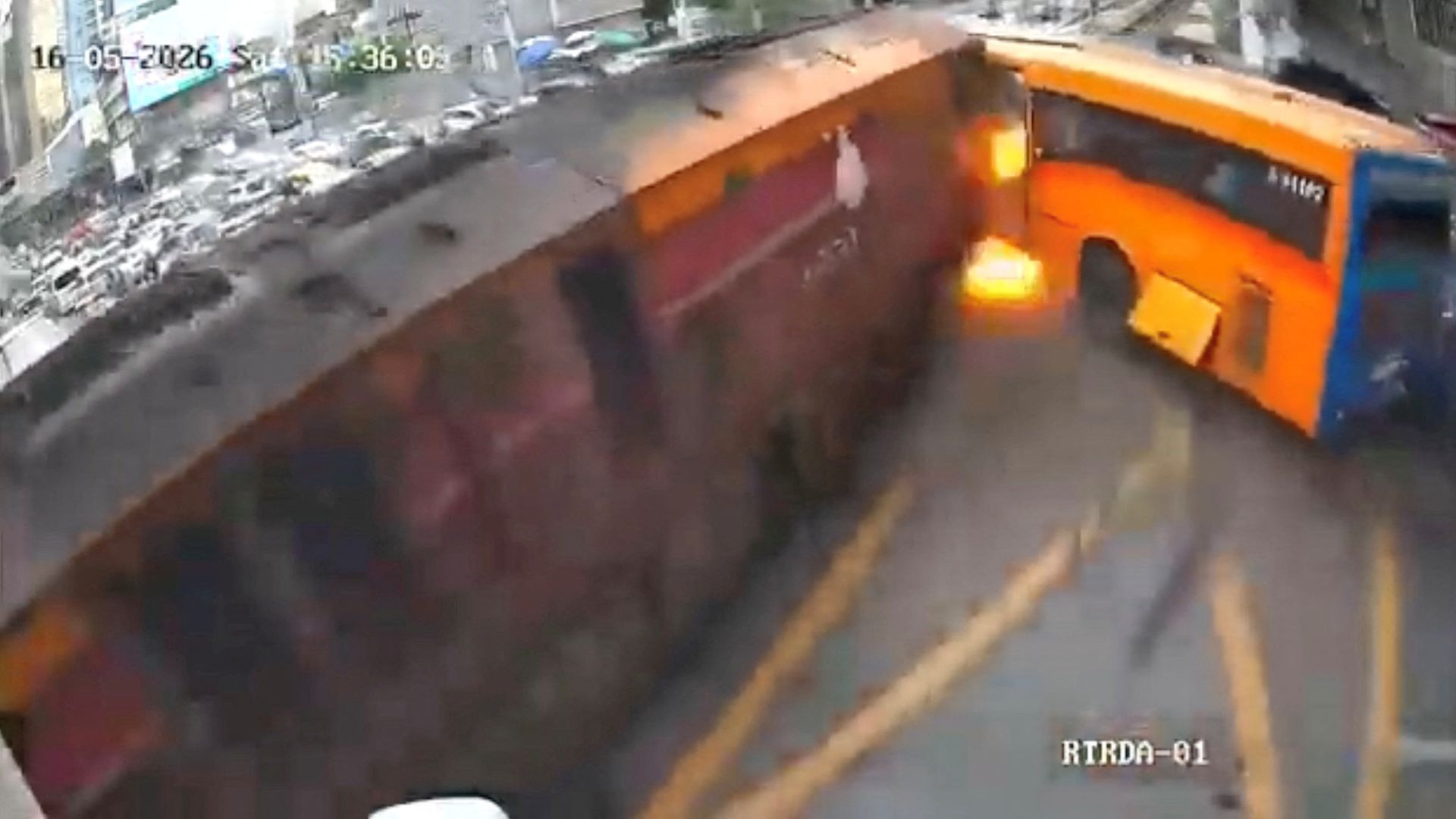
When a passenger train derailed in the early morning mist near Hua Hin, Thailand, the immediate aftermath followed a script written a thousand times before in the annals of industrial transit. Metal tore through dirt. Screams pierced the quiet coastal air. The twisted wreckage of seven cars lay splayed across the ballast like a broken spine. In the cold light of the following afternoon, investigators stood among the debris with clipboards, looking for a variable to blame.
They found one. They always do.
The driver was arrested and charged with reckless driving causing death and injury. To the public reading the morning headlines, the narrative instantly solidified into something simple, digestible, and neat. An irresponsible employee. A tragic oversight. Justice being served.
But anyone who has ever held the controls of a heavy machine knows that blame is rarely a straight line. It is a web.
The Illusion of Absolute Control
To understand what happens in the cab of a train before it leaves the rails, you have to understand the sheer, terrifying momentum of rail transit. A fully loaded passenger train cannot stop on a dime. It cannot swerve. When an obstacle appears or a signal is missed, the driver is not operating a vehicle so much as they are managing an inevitability.
Consider the physics of the situation. At eighty kilometers per hour, a train requires hundreds of meters just to slow down, even with the emergency brakes fully engaged. The driver is constantly projecting their mind a kilometer down the track, anticipating what cannot yet be seen.
Every modern locomotive is equipped with safety mechanisms designed to prevent human error. Chief among them is the safety device colloquially known as the dead man’s switch. It is a pedal or a lever that the driver must press down at regular intervals. If they fall asleep, faint, or suffer a medical emergency, their hand relaxes, the switch releases, and the brakes engage automatically.
It is a system built on the assumption that technology can perfectly police the frailties of the human body.
But devices fail. Or, more accurately, the interface between human fatigue and mechanical design breaks down. When a driver is exhausted, their body can find ways to mimic alertness. They can press a pedal out of pure muscle memory while their brain is effectively asleep. The machine registers a conscious operator. The reality is a ghost at the wheel.
When the state prosecutor brings charges of negligence, they look at the final moments before the impact. Did the driver see the signal? Did they brake too late? The law requires a clear chain of cause and effect to secure a conviction. It demands a villain.
What the law rarely examines is the environment that created the mistake.
The Long Shift and the Red Signal
Imagine sitting in that cabin for hours on end, staring into the darkness. The headlights slice through the mist, illuminating only a sliver of the path ahead. Your eyes strain to catch the color of the next signal lamp hidden around a bend. Green means life. Red means the end of the world.
Under staffing shortages and tight scheduling pressures, drivers frequently push through boundaries of fatigue that would shock the average commuter. The human brain under extreme sleep deprivation does not simply shut off like a light bulb. It experiences microsleeps—bursts of unconsciousness lasting only a few seconds.
During a five-second microsleep, a train traveling at full speed covers more than a hundred meters. In that blind window, a warning sign flashes past, unseen. A speed restriction zone begins, unnoticed.
When the train finally hits the curve too fast, the laws of centrifugal force take over. No amount of desperate braking can pull the wheels back onto the steel. The derailment itself is noisy, violent, and chaotic, but the mistake that caused it was completely silent. It happened minutes earlier, inside the quiet spaces of a exhausted mind.
The aftermath of the Thailand crash left families mourning those who never made it to their destination. The local hospitals filled with the injured, their vacations and commutes shattered in a single fraction of a second. The emotional toll on a community when a public utility turns lethal is immense. The demand for answers is immediate and fierce.
Charging the driver satisfies that collective need for retribution. It provides a face for the tragedy. It allows the railway authority to signal to the public that the problem has been identified and isolated.
But the real problem lies elsewhere, untouched by a criminal indictment.
The Structural Deficit of Safety
If we treat every rail disaster as an isolated incident of human failure, we guarantee that the next one will happen. The history of rail transport across the globe shows a consistent pattern: accidents occur where infrastructure investment fails to keep pace with demand.
Many rail networks in developing transport hubs rely on legacy systems. Signals can be obscured by overgrown vegetation. Track maintenance can be deferred to save costs. Automatic train protection systems, which override the driver entirely if a red signal is bypassed, are expensive to install and maintain across thousands of kilometers of track. Without these automated fail-safes, the entire system rests on a single point of failure: the eyes and reflexes of the person in the cab.
We ask drivers to be infallible gods of vigilance, yet we treat them as disposable cogs when the system around them breaks down.
When a driver faces decades in a prison cell for a split-second error, it sends a chill through the entire industry. It creates a culture of fear rather than a culture of safety. Drivers become hesitant, terrified of making the wrong call, or they learn to hide their fatigue out of fear of losing their livelihoods.
True safety does not come from the threat of prosecution. It comes from redundancy. It comes from a system that assumes the human operator will eventually make a mistake, and builds two or three technological nets to catch them when they fall.
The True Cost of Moving Forward
The court proceedings will eventually begin in Thailand. Attorneys will argue over telemetry data, maintenance logs, and toxicological reports. The driver will sit in the dock, bearing the weight of every life lost on that dark stretch of track.
For the survivors and the families of the victims, no verdict will truly restore what was lost. The empty chairs at dinner tables remain empty regardless of whether a man goes to prison.
But as the headlines fade and the wreckage is cleared away to make room for the next morning express, the fundamental question remains unanswered. We want fast, cheap, efficient travel. We want to cross countries in hours, reading books or sleeping in our berths while the night flies past outside our windows. We trust our lives to a stranger in a small metal cabin, assuming that the tracks beneath us are secure and the systems guarding us are flawless.
The next time you board a train and feel that sudden, sharp tilt as the carriages negotiate a curve, remember the immense forces at play. Remember the delicate balance between human endurance and mechanical momentum.
Somewhere up ahead, through the glass of the front cabin, someone is staring into the dark, fighting the rhythm of the rails, their foot pressed hard against the floorboards, holding back the chaos with nothing but a switch.