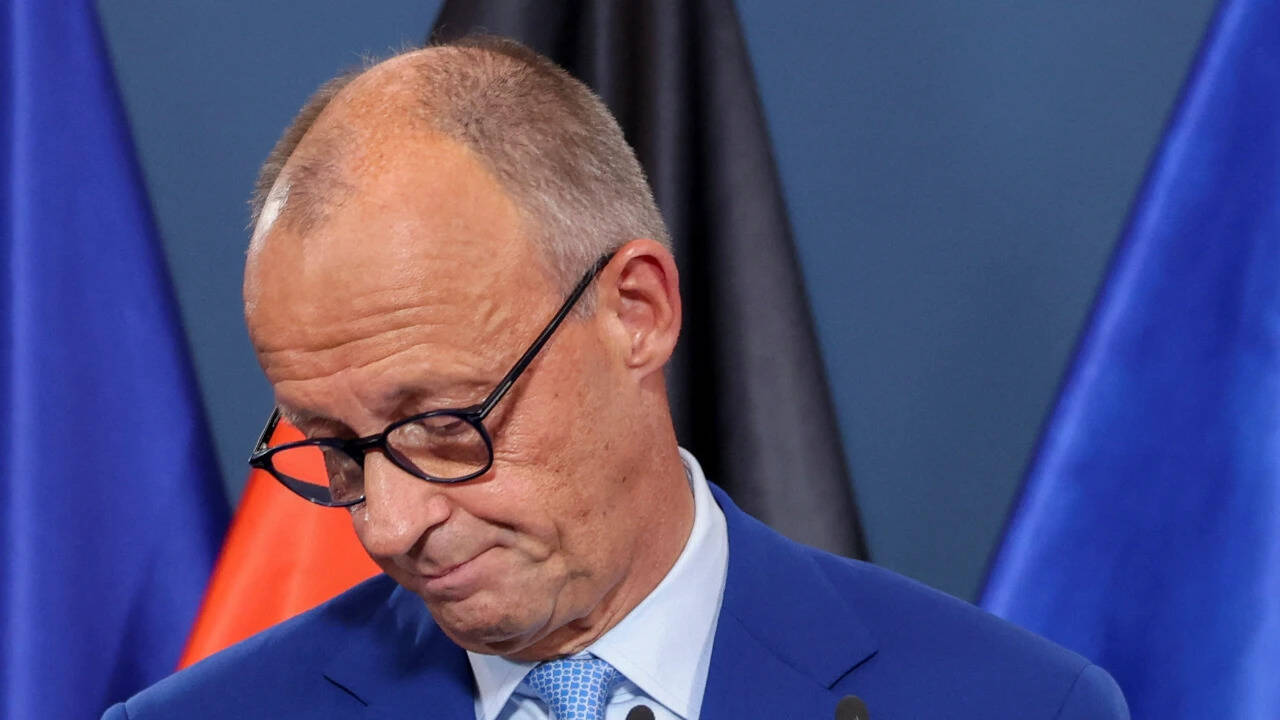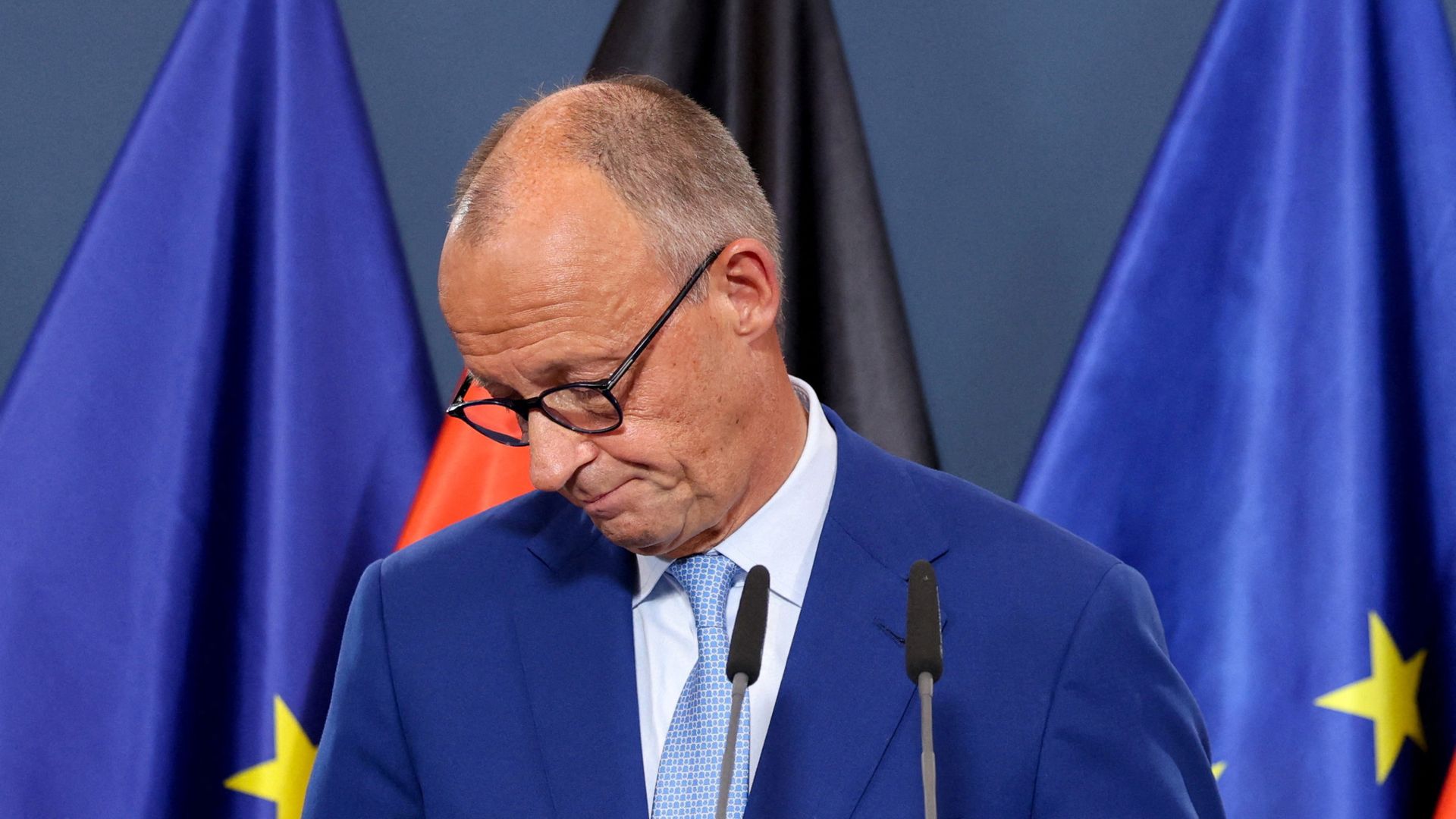
Friedrich Merz stood before the cameras in September 2026 and called his party’s state election results a "disaster". The international press dutifully echoed the word in every headline. Pundits from London to Washington treated the collapse of the Christian Democratic Union (CDU) in Mecklenburg-Western Pomerania and its second-place finish in Berlin as the sudden, catastrophic implosion of the German political center.
They are looking at the scoreboard and completely missing the game.
Framing the 2026 state elections as a freak disaster for one under-pressure chancellor is the laziest consensus in European political commentary. It reduces a structural realignment of German democracy into a personality drama about whether Merz can survive until the 2029 federal election. Worse, it buys into a convenient fiction: that if the CDU just tweaks its messaging or swaps out its leadership, the old postwar order will snap back into place.
It will not. What happened in Mecklenburg-Western Pomerania and Berlin was not an accident, a fluke, or a temporary voter tantrum. It was the logical, mathematical consequence of a governing model that has run out of road.
The Myth of the Sudden Collapse
To understand why the "disaster" narrative fails, look at what actually happened at the ballot box rather than the panic in the chancellery.
In Mecklenburg-Western Pomerania, the far-right Alternative for Germany (AfD) finished first with 38.2% of the vote, building on its earlier first-place finish in Saxony-Anhalt. Meanwhile, the CDU crashed below the 5% electoral threshold—shut out of a state parliament for the first time since German reunification. In Berlin, the narrative flipped horizontally while telling the exact same structural story: the far-left Die Linke surged to roughly 25.7% on a platform of expropriating corporate landlords, beating the incumbent CDU (18.8%) by nearly seven points, while the AfD climbed to 16.3%.
Notice the pattern. Voters did not simply punish a conservative chancellor by drifting toward a moderate alternative. They abandoned the federal governing coalition from both ends simultaneously.
The Social Democratic Party (SPD)—Merz’s federal coalition partner—suffered its own historic humiliation in the capital, cratering to 12.1% in a city it once treated as a political birthright. Even in Mecklenburg-Western Pomerania, where incumbent SPD premier Manuela Schwesig managed to rally 35.5% of the vote to finish second, she did so only by running against her own party's federal government in Berlin.
When a state premier has to campaign against her own national coalition to survive, the problem is not a bad election night. The problem is that the center itself has lost its gravitational pull.
Why the "Brandmauer" Is Eating the Center Alive
For years, Germany’s political establishment has relied on a single doctrinal mechanism to manage fragmentation: the Brandmauer, or firewall. The rule is simple. No mainstream party cooperates with the AfD—and in many conservative circles, no cooperation with Die Linke either.
In theory, the firewall protects democratic norms by isolating political extremes. In practice, it has become an engine of permanent voter alienation.
I have watched political strategists across Europe make this exact miscalculation for a decade. They treat coalition arithmetic as a substitute for governing legitimacy. When mainstream parties draw hard exclusion lines around 35% to 40% of an electorate, they do not make those voters disappear. Instead, they force every remaining party inside the firewall into unnatural, ideologically incoherent alliances just to form a mathematical majority.
Look at the aftermath of the 2026 state votes:
- In Saxony-Anhalt, keeping the AfD out of power required stitching together a fragile CDU-SPD-BSW arrangement reliant on tacit backing from Die Linke.
- In Mecklenburg-Western Pomerania, keeping the first-place AfD out of office pushed the SPD into coalition talks with Die Linke and the Greens.
- In Berlin, the fragmentation left six parties splitting the vote while housing anger handed the plurality to a party advocating property expropriation.
Here is the counter-intuitive reality that mainstream commentators refuse to admit: the firewall actively rewards protest voting.
If you are a dissatisfied voter in eastern Germany, voting for the AfD carries zero risk of forcing your preferred party to make messy, unpopular governing compromises. You know the establishment will lock them out. Meanwhile, every party inside the firewall has to water down its core promises to survive multi-party coalition negotiations. Conservatives swallow left-wing spending; Social Democrats swallow austerity. Nobody gets what they voted for, and every governing coalition looks like an identical cartel of compromises.
Calling the result a "disaster" for Merz implies he lost a fair fight on policy. In truth, the CDU was crushed in the vise of a system where the center bears 100% of the responsibility for unpopular trade-offs while the flanks enjoy 100% of the freedom to promise painless miracles.
The Economic Reform Trap Nobody Wants to Own
Let’s look at the second lazy consensus: that Merz’s plummeting approval ratings—dropping from 42% in mid-2025 to 13% by September 2026—prove his economic reform agenda was a political blunder.
When Merz entered the chancellery in May 2025, he promised a Wirtschaftswende—an economic turnaround to pull Germany out of industrial stagnation. By the summer of 2026, his government was pushing structural reforms to pensions, healthcare, and the 2027 budget while hundreds of thousands of demonstrators marched in the streets under the banner "Hard-earned! Your work. Your health. Your pension."
Critics inside and outside the CDU immediately argued that Merz moved too fast, communicated too harshly, and alienated working-class voters right before crucial state elections. Even members of his own SPD coalition partners demanded reopening the pension and budget deals the moment the Saxony-Anhalt votes were counted.
That criticism gets the causality completely backward.
Germany’s demographic and industrial math is unforgiving. An aging population, high energy costs, sluggish productivity, and mounting defense commitments cannot be wished away with softer rhetoric. Any chancellor who actually attempts to restructure Germany’s welfare and fiscal model will trigger massive short-term backlash. There is no version of pension reform or budget discipline that polls well in year one.
The real failure in Berlin was not attempting structural reform. The real failure was trying to execute painful supply-side medicine inside a grand coalition with a center-left partner whose voter base violently opposes the prescription.
When a government announces tough reforms, watches its coalition partners publicly distance themselves from those reforms during state campaigns, and then calls the resulting election a "disaster," voters draw a devastating conclusion: the people in charge do not even believe in their own plan.
What the Headlines Get Wrong About Voter Anger
If you ask conventional analysts why voters fled the mainstream parties in September 2026, you will get a predictable checklist: inflation, immigration, energy prices, and fatigue over financial and military aid to Ukraine.
All of those factors are real. None of them explain the scale of the institutional breakdown.
Look closer at who moved and how turnout behaved. Turnout in these state elections did not collapse—it surged to 77.8% in Saxony-Anhalt and 78.1% in Mecklenburg-Western Pomerania. In Saxony-Anhalt alone, the AfD mobilized roughly 170,000 previous non-voters. In Berlin, Die Linke tapped into acute urban anger over housing affordability. Across the map, support for anti-establishment parties spiked sharply among young men and voters who view their personal economic trajectory as deteriorating.
People are not checking out of democracy. They are using the ballot box as a wrecking ball because they believe the institutional pipeline between voting and policy change is broken.
Think about the psychology of a voter in Mecklenburg-Western Pomerania or a renter in Berlin. For decades, alternating between the CDU and the SPD produced incremental adjustments within a narrow consensus. Today, voters see high living costs, strained public infrastructure, and a political class bogged down in cabinet reshuffles and internal party scandals. When Merz warned after the vote that trust in institutions was waning and being undermined by radical parties on the left and right, he missed the mirror in front of him.
Radical parties do not manufacture institutional distrust out of thin air. They harvest distrust that mainstream governments plant through years of over-promising and under-delivering.
The Case Against Replacing Merz Right Now
In the days following the September defeats, political insiders immediately turned to the classic Washington-and-Berlin parlor game: Who replaces the leader?
Even Der Spiegel declared Merz "clearly the wrong man for the job at this time," while whispers of a confidence vote or a party leadership handover circulated through Berlin.
Replacing Merz in the middle of this term would be the single worst move the CDU could make.
Imagine a scenario where the CDU forces Merz out, installs a smoother, more telegenic centrist, and hits pause on the contentious 2027 budget and pension reforms to calm the polls. What happens next?
- The SPD smells blood and demands even greater concessions on spending and welfare to stay in the federal coalition.
- The AfD campaigns on a devastatingly simple message: the establishment just proved that voting works, because they panicked and threw their own chancellor overboard—yet nothing in your wallet changed.
- The new chancellor inherits the exact same parliamentary math, the exact same sluggish economy, and three fewer years before the 2029 federal election to show tangible results.
As Die Zeit editor Bernd Ulrich shrewdly observed during the crisis, Merz was temporarily stabilized partly because nobody else in his party actually wanted the job. That reluctance tells you everything. The problems crushing the CDU are structural, not cosmetic. Changing the captain while refusing to patch the hull just gets a new captain wet.
To be clear, sticking with a deeply unpopular chancellor carries brutal risks. Merz’s combative style alienates moderate voters, his party’s eastern state chapters are openly questioning the firewall, and a lame-duck chancellery could paralyze European decision-making in Paris and Brussels. Those downsides are real and cannot be spun away.
Yet capitulating to short-term panic guarantees long-term irrelevance.
How Berlin Actually Escapes the Death Spiral
If mainstream German politics wants to survive the decade without turning into a permanent caretaker bureaucracy, it has to abandon the playbook that produced September 2026. That requires three uncomfortable shifts that almost no one in Berlin wants to say out loud.
1. Stop Governing Like an Apologetic Committee
If the Merz coalition is going to pass painful structural reforms to pensions, labor, and energy, it must pass them cleanly, own them publicly, and let voters judge the actual economic results by 2029. Half-measures watered down to appease every faction inside a grand coalition deliver all the political pain of reform with none of the economic growth.
2. Replace Performative Firewalls with Policy Competition
You do not defeat a 38% protest movement by lecturing voters about democratic norms. You defeat it by proving that mainstream governance can solve tangible problems—housing supply in Berlin, industrial energy costs in the east, border enforcement, and administrative bloat—faster and more competently than the fringes.
3. Accept Asymmetric Local Realities
Berlin is not Mecklenburg-Western Pomerania, and neither looks like Bavaria. Forcing every state chapter of a national party to march in rigid ideological lockstep ignores the basic federal design of the German republic. Regional leaders need room to address local economic grievances without having every municipal decision turned into a referendum on the federal chancellery.
The headlines called September’s state elections a disaster for Friedrich Merz. They got the target wrong. A politician losing a vote is just Tuesday in a democracy. A political establishment that watches voters flee to both extremes, blames the electorate for losing trust, and refuses to examine its own broken coalition model—that is the real disaster, and no leadership reshuffle will save them from it.