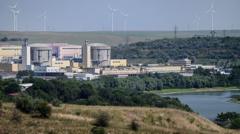
When a river drops too low to cool a reactor, you don't have a choice. You pull the plug. That is exactly what happened in Romania when the state-owned Cernavodă Nuclear Power Plant shut down its final active reactor.
Extreme heat and a brutal, prolonged drought across Europe shrank the Danube River to historic lows. The river is the literal lifeblood of the plant, supplying the massive volume of water required for cooling. Without it, operations cannot safely continue.
This isn't a minor administrative hiccup. The Cernavodă facility generates roughly twenty percent of Romania's total electricity. Taking both of its 700MW reactors completely offline creates an immediate supply gap that the nation has to scramble to fill.
Desperate Measures Before the Shutdown
Authorities didn't just walk away and let the plant go dark without a fight. Weeks before the final shutdown, Romania took frantic, high-stakes steps to force more water toward the plant's intake pipes.
Crews blasted apart stubborn rock formations on the riverbed and dragged in heavy machinery for extensive dredging. In an even more striking move, workers sank four rock-filled barges directly into the river to act as makeshift barriers, forcing the dwindling current to alter its course toward the facility.
Those engineering efforts cost more than two million euros and bought a few extra days of operation. They simply could not beat the sheer scale of the climate pressure. By late July, the first reactor was already powered down. Unit two followed shortly after, with the controlled shutdown sequence starting at seven in the morning and finishing by midday.
Keeping the Lights On Without Nuclear Power
When you lose a fifth of your national power grid overnight, you have to find alternatives fast. The Romanian Energy Ministry insists that the lights won't go out in residential homes, but the strategy relies heavily on balancing a fragile mix of resources.
The country is currently leaning on a combination of wind power, remaining hydro reserves, and coal-fired generation. Officials even asked the European Commission for permission to delay the planned closure of the Turceni coal plant's unit five to keep extra reserve capacity online.
Imports are picking up the rest of the slack. Regional power grids have enough cross-border capacity to cover the shortfall, but relying on foreign electricity during a continent-wide heatwave is an expensive gamble.
What This Means for Europe's Energy Future
Romania is not alone in this fight. Across Europe, low water levels in major waterways are wreaking havoc on heavy industry and energy production. Neighbouring countries using the Danube for cooling or hydropower are feeling the exact same pinch.
When infrastructure depends on predictable weather patterns that no longer exist, vulnerabilities show up fast. Nuclear energy is low-carbon and reliable in theory, but it relies entirely on a stable supply of cooling water. If rivers dry up, the plants stop.
Right now, state-owned operator Nuclearelectrica says restarting the plant depends entirely on weather forecasts and the return of rain to the Danube basin. Until the river levels climb back to safe operating thresholds, the reactors will stay cold.
Monitor weather reports, reduce voluntary power consumption where you can, and expect industrial restrictions if the drought lingers.