The Feel-Good Trap of Charismatic Megafauna
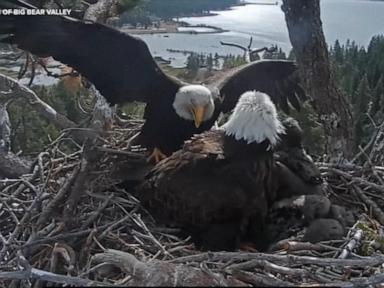
The local news loves a bake sale for a bald eagle. It’s the perfect PR loop: earnest students, a majestic national symbol, and a check handed over to protect a specific "habitat." Everyone goes home feeling like a hero.
But behind the high-definition footage of wingspans and slow-motion releases, the math of modern conservation is failing. We are pouring millions into "boutique conservation"—the practice of saving single, photogenic species—while the foundational ecosystems those species supposedly represent are quietly being gutted by the very logic that claims to save them.
The bald eagle is no longer an endangered species. It hasn’t been since 2007. In many parts of North America, eagle populations are at record highs. Yet, because they are "brand-name" animals, they suck the oxygen (and the funding) out of the room. When students raise money for an eagle habitat, they aren't saving an ecosystem; they are subsidizing a luxury real estate project for a bird that is already winning the evolutionary race.
The Triage We Refuse to Face
In the world of ecological restoration, we operate on a limited budget. Conservation is a zero-sum game. Every dollar spent on a species that has already recovered is a dollar stolen from the unglamorous, ugly, and vital organisms currently facing extinction.
Consider the Blanding’s Turtle or the Hine’s Emerald Dragonfly. They aren't going to end up on a gold coin. They don't make for a stirring viral video. But their disappearance signals the collapse of specialized wetland niches that the eagle, a generalist predator, doesn't even require to survive.
I’ve spent years watching boardrooms and non-profits chase "flagship species" because they are easy to market. It’s easier to sell a feather than a fungus. But if you protect a forest just for the eagle, you might ignore the soil quality, the fungal networks, or the insect biomass that actually keeps the forest breathing. We are decorating the penthouse of a building while the foundation is being eaten by termites.
Habitat Preservation vs. Habitat Performance
The "protect the habitat" mantra is often a mask for land hoarding that doesn't actually produce ecological results. Just because you put a fence around a piece of land and call it a "sanctuary" doesn't mean it’s functioning.
True conservation requires Disturbance Ecology. Many of the habitats we try to "save" actually need periodic fires, flooding, or heavy grazing to remain viable. However, when you center your conservation efforts on a specific nesting pair of eagles, you can’t run a prescribed burn. You can’t allow the natural volatility of an ecosystem to occur because you are too busy protecting the "asset"—the bird.
We have turned nature into a museum. We want it static. We want it safe. We want it to look like a screensaver. But healthy nature is violent, messy, and constantly shifting. By focusing on the eagle, we force the habitat to remain in a state of arrested development.
The High Cost of Sentimentalism
The "People Also Ask" section of the internet is filled with queries like, "How can I help save the eagles?" The honest, brutal answer? Stop helping them. They’ve got it from here.
If you actually care about biodiversity, you should be funding:
- Apex Predator Reintroduction (beyond birds): Wolves and cougars do more for habitat health through "landscapes of fear" than a thousand nesting platforms ever will.
- Invertebrate Biomass: If the bugs die, the system dies. Period.
- Connectivity Corridors: Buying a 10-acre "eagle grove" is a vanity project. We need 100-mile stretches of connected scrubland that allow for genetic migration.
The students in that article mean well. Their teachers mean well. But they are being taught a version of environmentalism that is decades out of date. It’s a version that prioritizes the "ego" in ecology. We save what we think is pretty, and we let the rest burn.
The Taxonomy of Misallocated Resources
Let’s look at the "Efficiency of Impact" ratio.
Imagine a scenario where $10,000 is raised.
- Option A: Spend it on "Eagle Habitat" signs, fencing for a known nest, and a local awareness campaign. Result: One pair of eagles continues to exist exactly where they were before.
- Option B: Spend it on removing invasive buckthorn from a local watershed and re-seeding native prairie plants. Result: A 400% increase in pollinator diversity, improved water filtration for the entire county, and the restoration of a food chain that supports hundreds of species—including, eventually, the eagle.
We almost always choose Option A. Why? Because you can’t take a selfie with a watershed.
Stop Donating to Success Stories
The bald eagle is the "Amazon.com" of the bird world. It’s a titan. It’s dominant. It doesn't need your charity.
If a species is stable enough to be the subject of a heartwarming local news segment, it is stable enough to survive without your bake sale proceeds. The true front lines of extinction are silent, brown, slimy, and incredibly boring to 5th graders.
We need to shift from Species-Centric Conservation to Process-Centric Conservation. We should not be protecting "eagle habitats"; we should be protecting biological processes—carbon sequestration, nitrogen fixation, and hydrological cycles.
The eagle will be fine. It is a scavenger that thrives on the edges of human civilization. It eats roadkill and steals fish from smaller birds. It is an opportunist. It is time we stopped treating it like a fragile porcelain doll and started focusing on the crumbling shelf it’s sitting on.
Take the money you were going to give to the eagle fund. Find a land trust that buys "worthless" swamp land. Find a group that advocates for the protection of native grasses. Find the people who are fighting for the unlovable species.
Anything less isn't conservation. It’s just gardening with a nationalistic ego.
Stop saving the symbols. Start saving the systems.