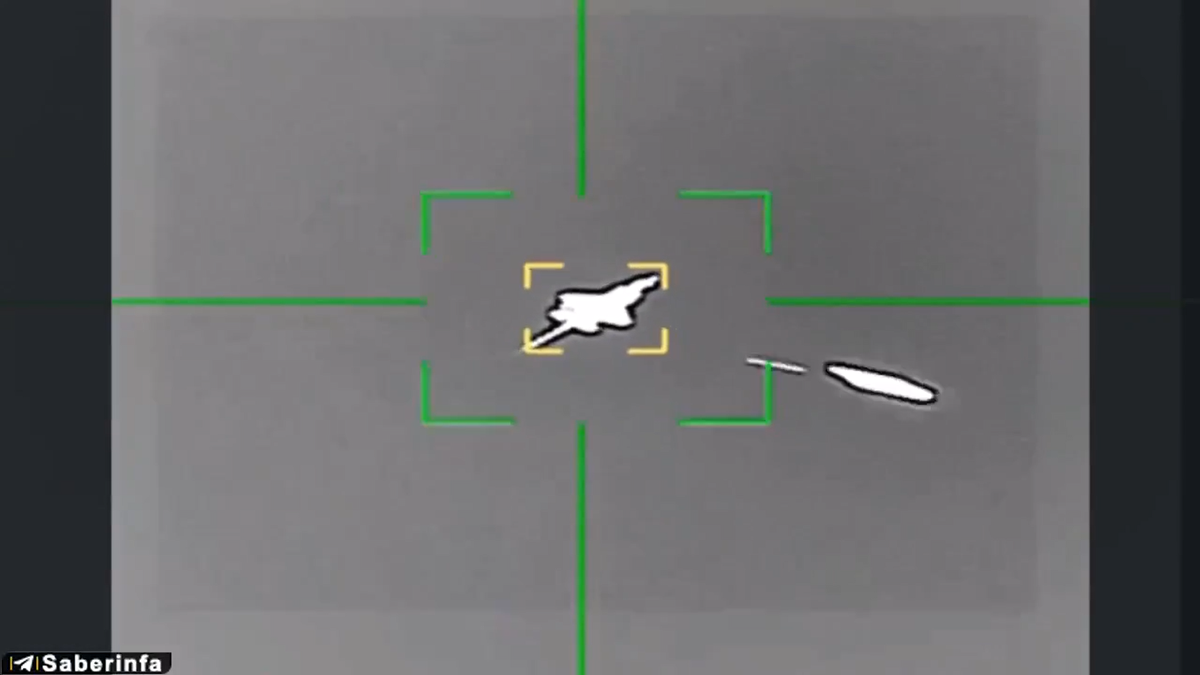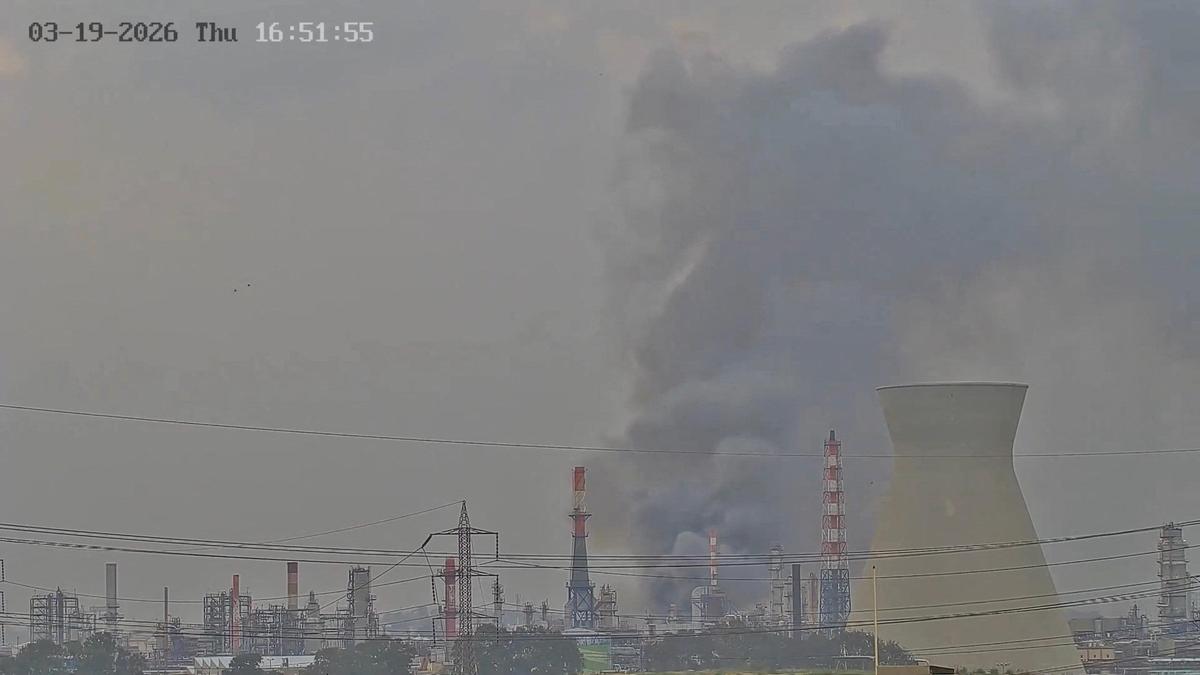
The headlines are screaming about a "direct hit" on the Haifa oil refinery. Pundits are already forecasting an energy apocalypse. They want you to believe we are on the precipice of a global supply chain collapse because a few storage tanks caught fire.
They are wrong. Meanwhile, you can find other events here: The Calculated Silence Behind the June Strikes on Iran.
If you’re looking at the smoke over Haifa and seeing a military victory, you’re reading the wrong map. This wasn't a display of Iranian strength; it was a loud, expensive admission of tactical obsolescence. The "lazy consensus" in modern defense reporting suggests that hitting a refinery is a knockout blow. In reality, hitting a refinery in 2026 is the kinetic equivalent of punching a pillow. It looks dramatic on camera, but the pillow just reshapes itself while you break your hand.
The Myth of the Fragile Hub
Most analysts treat the energy grid like it's 1943. Back then, if you bombed the Ploiești oil fields, the Luftwaffe stopped flying. Today, the global energy market is a liquid, hyper-redundant organism. To understand the bigger picture, check out the detailed article by The New York Times.
The Haifa refinery—officially known as Bazan Group—is a massive piece of infrastructure, but it is not a "pivotal" node in the way the 24-hour news cycle wants you to believe. Israel has spent the last decade diversifying its energy portfolio. Between the Leviathan and Tamar gas fields and a massive shift toward renewables and decentralized storage, a fire at a 100-year-old refinery is a local logistics headache, not a national security crisis.
When a missile hits a storage tank, you get a "spectacular." That’s a term of art for a fire that burns bright, produces black smoke for the evening news, and does almost zero long-term damage to the actual refining capability. Tanks are replaceable. Pipelines are modular. The "damage" reported is almost always superficial.
I have watched companies waste hundreds of millions of dollars on "hardened" infrastructure only to realize that the most resilient system isn't the one that doesn't break—it’s the one that doesn't care if it breaks. Israel's energy sector is now built on that exact principle.
The Irony of Precision
The competitor's report claims this was a sophisticated operation. If by sophisticated, they mean "spending $2 million on a drone to destroy $50,000 worth of unrefined crude," then sure, it was a genius move.
We need to talk about the Energy Return on Investment (EROI) of kinetic warfare.
- The Attack: Cost of drones/missiles, intelligence, and the political capital of a direct strike.
- The Result: A temporary dip in local refining capacity that can be offset by increasing imports through the Port of Ashdod within 48 hours.
This is the "asymmetry trap." Everyone talks about how cheap drones make it easy for smaller powers to hit big targets. They forget that the recovery cost for a modern, tech-heavy nation is often lower than the opportunity cost for the attacker. Iran just signaled its hand, burned a high-value asset, and achieved a "reported damage" status that won't even move the needle on Israel's GDP.
Why the "People Also Ask" Questions Are All Wrong
If you’re asking "Will gas prices go up tomorrow?" you’re falling for the grift.
The real question is: Why did the strike fail to hit the control systems?
Refineries are essentially giant chemistry sets controlled by digital brains. If you want to "disrupt" an industry, you don't blow up the oil; you brick the PLCs (Programmable Logic Controllers). The fact that this attack focused on the physical storage tanks proves one of two things:
- The attackers lack the intelligence to map the "soft" infrastructure.
- They are more interested in a PR victory than a strategic one.
Brutal honesty: This was a fireworks display designed for a domestic audience in Tehran, not a military strike designed to cripple an adversary. If the intent was truly to dismantle Israeli industry, the target wouldn't have been a refinery in Haifa; it would have been the desalination plants or the high-tech corridors in Herzliya.
The Resilience Paradox
There is a downside to my contrarian view, and it’s one we have to admit: overconfidence leads to stagnation. By dismissing these strikes as "spectaculars," there is a risk that the defense industry stops innovating.
However, the data shows that hardened, centralized targets are becoming less relevant. We are moving toward a world of Distributed Energy Resources (DER). When power and fuel are produced and stored in a thousand different locations rather than one massive refinery, the very concept of a "strategic strike" becomes a joke.
Imagine a scenario where a country has no single refinery to hit. Where every neighborhood has its own microgrid and modular fuel processing. In that world, an "attack on the refinery" is an impossibility because the refinery doesn't exist as a single point of failure. Israel is closer to this reality than the "expert" commentators realize.
Stop Tracking Barrels, Start Tracking Bits
The media is obsessed with the physical—the fire, the smoke, the twisted metal. They are ignoring the electronic warfare that happened in the seconds before and after those missiles landed.
The real war wasn't the explosion; it was the attempt to blind the Iron Dome and the subsequent cyber-counteroffensive. If you’re still counting the number of barrels lost in a fire, you’re fighting the last war. The modern insider knows that a refinery is just a pile of pipes. The real value is in the data that keeps those pipes running.
The strike on Haifa didn't show us that Israel is vulnerable. It showed us that the "missile-to-infrastructure" playbook is running out of steam. It’s an expensive, loud, and ultimately ineffective way to conduct modern statecraft.
If you want to know who won today, don't look at the fire in Haifa. Look at the stock prices of the logistics firms that are already rerouting tankers to Ashdod. They didn't even skip a beat.
The refinery is burning. The system is fine. Get used to it.